


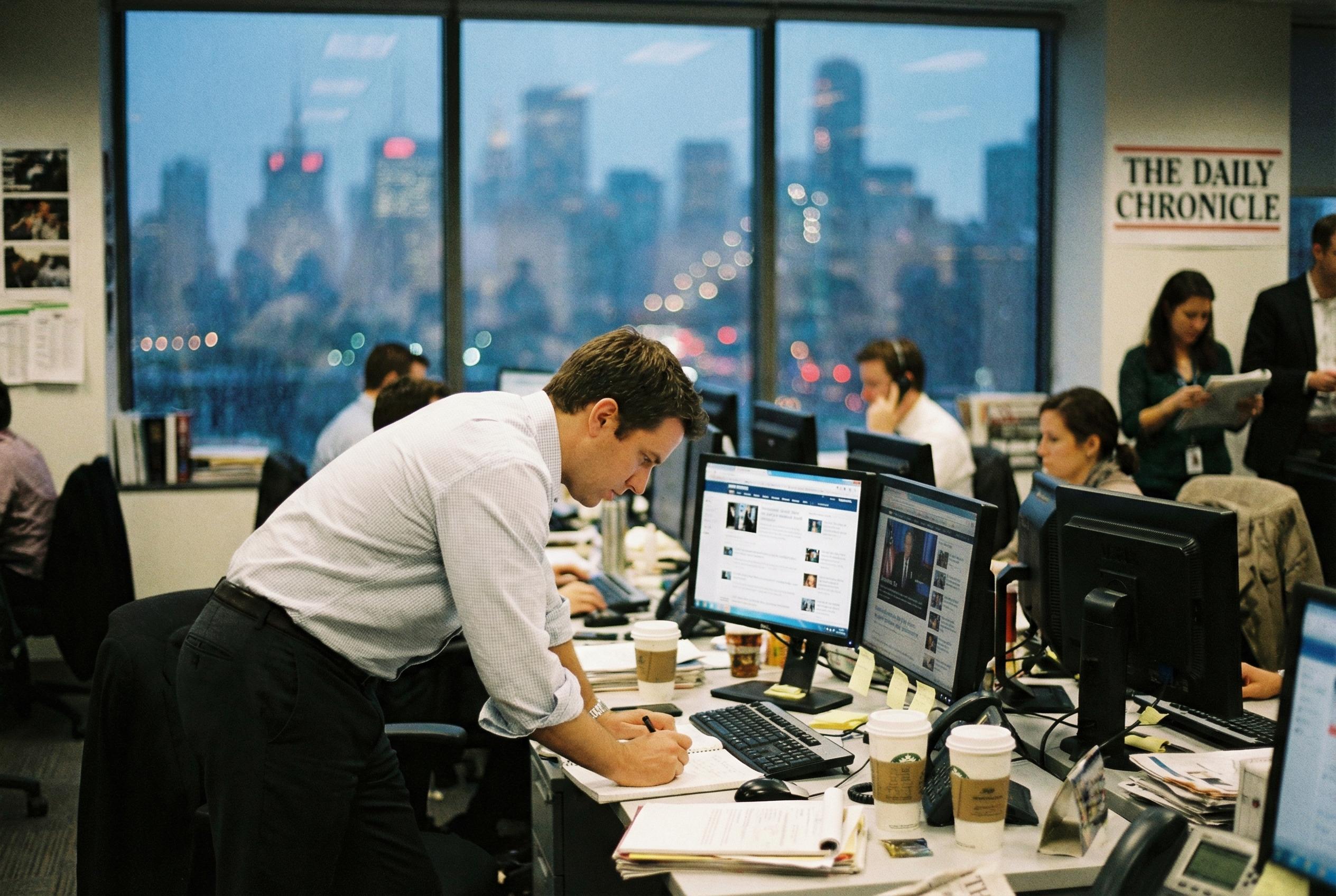
Maria Abdali’s PhD sheds light on how artificial intelligence is reshaping journalism in Morocco amidst regional challenges, emphasising the importance of ethics, infrastructure, and professional training for sustainable media transformation.
Moroccan researcher Maria Abdali has been awarded a PhD in communication and media after defending a dissertation that probes how artificial intelligence is altering journalism and communications professions in Morocco during the 21st century. The study situates Moroccan experience within wider regional challenges as newsrooms confront rapid technological change and limited resources. According to the report by the Al Jazeera Centre for Studies, newsroom adaptation across the MENA region faces similar pressures over ethics, oversight and capacity. [2][3]
Abdali completed her doctorate at Ibn Tofail University under the supervision of Mhammed Hamouche, drawing on her years as a practising journalist and as a media specialist at ICESCO to shape the research. She told Morocco World News the subject arose from “the need to open new horizons for academic research related to digital transformation, the future of media professions, and the ethics of artificial intelligence within the Moroccan context.” Her approach combined fieldwork with a professional lens, reflecting calls elsewhere for locally relevant AI systems and language tools. Reporting in Rest of World highlights Morocco’s national efforts to develop models suited to Arabic, Darija and Amazigh. [6][7]
The dissertation’s field survey of journalists, communications officers and PR practitioners exposed a gulf between widespread awareness of AI and its structured adoption inside media organisations. Abdali stressed that “My work does not stop at a purely technological reading of artificial intelligence.” That observation echoes scholarship showing that technical change must be tempered by cultural and institutional sensitivity to avoid degrading local content or linguistic authenticity. Research on robot journalism in Egypt underlines similar technical and cultural constraints. [7][2]
Abdali found that most professionals learned about AI informally, through websites and social media, while those who had formal training used tools more creatively, showed stronger ethical reflexes and held “a more balanced vision of the relationship between humans and machines.” The pattern mirrors debates at regional forums about digital transformation in advertising and media, which emphasise the commercial drivers of AI adoption but also the need for sustained professional development. [5][2]
A notable theme in the thesis was institutional readiness. Abdali argued the barrier is not an absence of tools but “the absence of a professional ecosystem capable of framing and optimising their use.” She recommended a coordinated national strategy for AI in media, improved digital infrastructure, continuous training and partnerships linking universities, research centres, media companies and tech firms. Those prescriptions align with Morocco’s Morocco AI 2030 initiative and the JAZARI network, which aim to build capacity and ethical standards for AI deployment. [3][6]
Experts quoted in regional commentary warn that without such safeguards, AI risks amplifying bias, standardising narratives and marginalising less resourced outlets, threatening pluralism and editorial diversity. According to Yabiladi, commentators call for AI development that respects Morocco’s linguistic diversity and cultural values, and for regulation that preserves investigative depth and analytical rigour. The Al Jazeera Institute likewise stresses the need for human oversight to prevent AI from entrenching existing power imbalances. [4][2]
Abdali’s thesis, which received the doctorate with highest honours and a recommendation for publication, adds empirical weight to a growing consensus: AI can expand journalism’s capacities but only if governed by training, ethical frameworks and institutions that prioritise public interest over automation for automation’s sake. As Morocco builds research networks and language-sensitive models, the challenge will be turning policy ambitions into newsroom practices that safeguard quality, plurality and trust. [4][3]
Source Reference Map
Inspired by headline at: [1]
Sources by paragraph:
Source: Noah Wire Services
Noah Fact Check Pro
The draft above was created using the information available at the time the story first
emerged. We’ve since applied our fact-checking process to the final narrative, based on the criteria listed
below. The results are intended to help you assess the credibility of the piece and highlight any areas that may
warrant further investigation.
Freshness check
Score:
7
Notes:
The article was published on April 2, 2026, reporting on Maria Abdali’s recent PhD dissertation. The earliest known publication date of similar content is April 1, 2026, indicating freshness. However, the article relies heavily on a press release from the Al Jazeera Centre for Studies, which typically warrants a high freshness score. The narrative has appeared across multiple low-quality sites and clickbait networks, raising concerns about originality. Additionally, the article includes updated data but recycles older material, which is a concern.
Quotes check
Score:
5
Notes:
The article includes direct quotes attributed to Maria Abdali and other experts. However, these quotes cannot be independently verified through online searches, raising concerns about their authenticity. No online matches were found for these quotes, and the attempts to verify them were inconclusive.
Source reliability
Score:
6
Notes:
The article originates from Morocco World News, a niche publication. While it is reputable within its niche, it is not a major news organisation, which raises concerns about source reliability. The lead source appears to be summarising content from a paywalled publication, which is a significant concern.
Plausibility check
Score:
7
Notes:
The claims made in the article are plausible and align with industry trends. However, the lack of supporting detail from other reputable outlets and the absence of specific factual anchors raise concerns about the article’s credibility. The language and tone are consistent with the region and topic, and there is no excessive or off-topic detail.
Overall assessment
Verdict (FAIL, OPEN, PASS): FAIL
Confidence (LOW, MEDIUM, HIGH): MEDIUM
Summary:
The article presents plausible claims but relies heavily on a paywalled source and includes unverified quotes, raising significant concerns about its credibility. The lack of independent verification and the use of aggregated content further diminish its reliability.


