


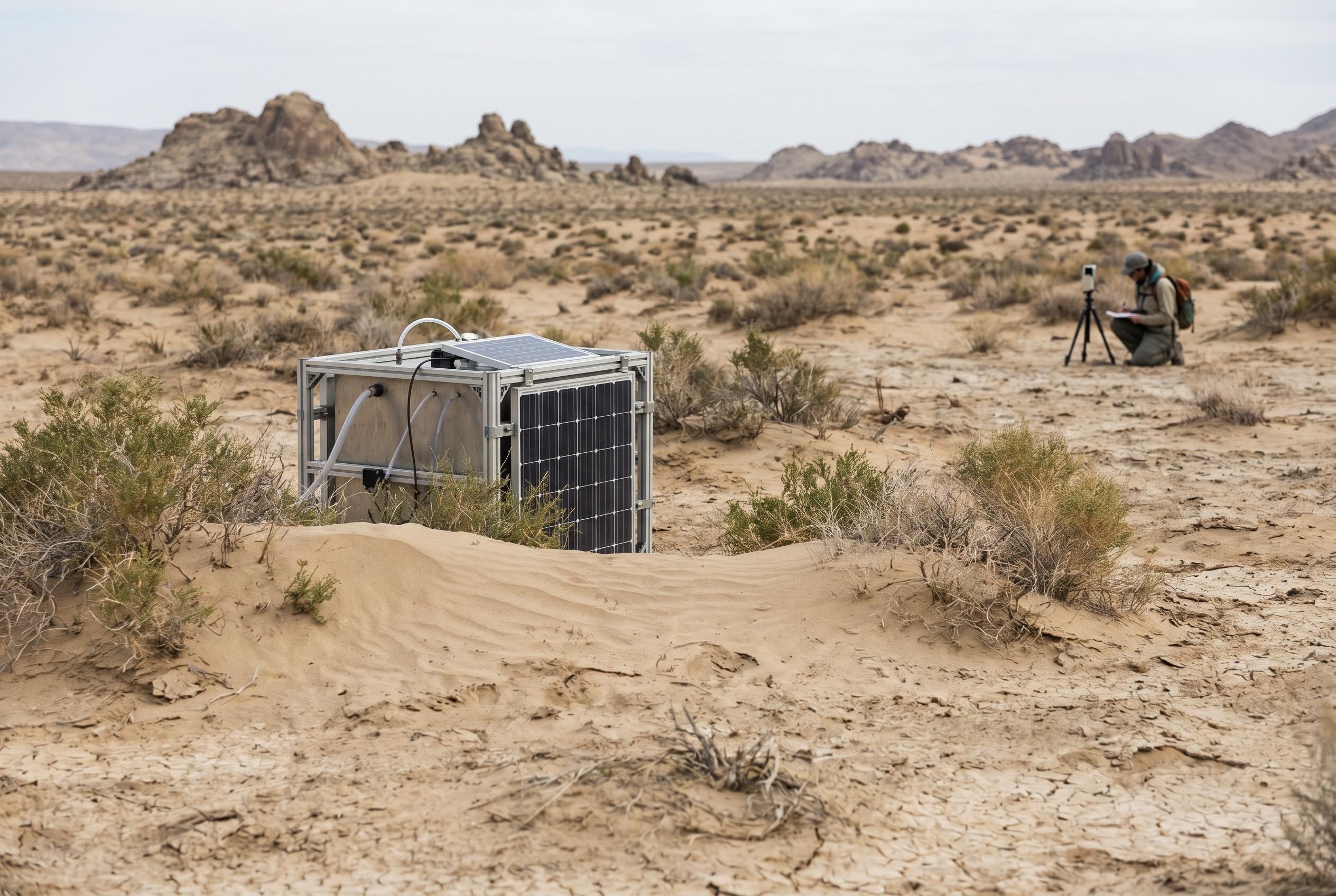
Shoppers and defence planners alike are watching a new wave of compact bioreactor tech , Biosphere’s US Army-funded portable protein system promises on-demand nutrition from gas fermentation, potentially reshaping how food and materials are made where supply lines are fragile. Here’s what to know and why it matters.
Essential Takeaways
- Funding boost: Biosphere won a roughly $9m US Department of Defense grant to build a portable, continuously operating bioreactor system for protein production.
- UV-first sterilisation: The design swaps heavy steam-in-place sterilisation for UV sterilisation, aiming for smaller, cheaper, faster-cleaning units.
- Gas fermentation focus: The project targets gas-fed microbes to make protein, which can use waste gases and run longer campaigns with less contamination risk.
- Engineering challenges: Gas-liquid mass transfer, gas safety and scaling costs remain the big technical and commercial hurdles.
- Practical promise: If it works, the kit could support distributed food, materials and therapeutic manufacture in contested or remote settings.
Why the Pentagon is funding tiny protein factories
The standout fact is simple: the US Army is putting serious money behind portable biomanufacturing. Biosphere’s grant funds a system designed to make protein on demand for warfighters or operations in remote zones, and the use-case is immediately visual , a compact unit that can turn air and simple feedstocks into usable nutrition when supply chains are cut.
This isn’t whimsy. According to press notices and company briefings, the project will produce a prototype capable of continuous operation, with UV sterilisation protocols, water and media recycling, and downstream processing. Defence interest reflects a broader DoD strategy to explore distributed production from skid-sized units up to larger facilities for food, materials and therapeutics.

For civilians, the implication is clear: technology developed for defence often trickles into civilian supply chains, disaster relief and remote communities. Smaller, rugged bioreactors could matter to humanitarian agencies as much as to armies.
UV sterilisation: a small, clean revolution inside the vessel
Biosphere is betting that replacing steam-in-place systems with UV sterilisation lets teams ditch bulky boilers, sprawling pipeworks and huge water loads. That’s an attractive engineering trade-off , UV kills contaminants quickly, lowers capex and could make reactors sleeker and easier to maintain.
The company has already commercialised UV-sterilised benchtop and pilot systems, and it’s moving towards larger demo-scale plants. That track record matters because sterilisation isn’t just a checkbox , it underpins product safety and uptime, and in field deployments fast, reliable cleaning could be the difference between a usable feed source and wasted hardware.
If you’re choosing a unit in future, ask about validated UV protocols, sensor feedback and how the system handles organic residue and biofilms. UV is powerful, but it needs the right optics and controls to be a stand-alone solution.
Gas fermentation: promise and pain in one package
Using gases rather than sugars changes the economics and logistics of making protein. Feedstocks like hydrogen, carbon monoxide or carbon dioxide can be cheaper and available as waste streams, and gas-fed campaigns often run longer with lower contamination risk , a big plus for continuous field operations.
But gases are poorly soluble in water, so the core engineering problem becomes mass transfer: how to get gas into liquid and into microbes efficiently while removing heat and keeping things safe. Specialized mixing, sparging strategies and robust safety systems add cost and complexity. Industry observers point to recent failures and pivots among air-to-protein startups as a reminder that promising chemistry doesn’t always translate smoothly into scaled production.
For buyers and operators, practical questions matter: where will green hydrogen or other gases come from, what safety training is needed, and how simple is the gas delivery system to maintain in austere conditions?
Picks-and-shovels tech: enabling the new biomanufacturing stack
Biosphere positions itself as an enabling-tech supplier , the “picks and shovels” of modern fermentation , by selling better reactors and controls rather than finished foods. That strategy echoes how other sectors evolved: improvements in instruments, sensors and strain stability unlock broader gains across many producers.
The company sees synergy with genetic and strain-focused firms that improve microbial stability, and with downstream tools that simplify processing. In short, a performant reactor plus a robust strain can make long, continuous production runs both reliable and economical.
If you’re following the space commercially, watch partnerships and licensing deals; this is where modular biomanufacturing could scale faster than vertically integrated models.
What this means for consumers, aid agencies and industry
A successful prototype could tilt the market toward distributed manufacturing for niche uses , emergency rations, remote research outposts, or bespoke materials on demand. For consumers, the direct impact is subtle but real: cheaper, more localised production could lower the environmental footprint of some ingredients over time.
That said, commercial viability depends on solving mass transfer, safety and sourcing of green feedstocks at scale. The DoD grant gives Biosphere runway to experiment with more exotic reactor designs that private investors might avoid, and that public-private pick-me-up could be what pushes gas fermentation from lab curiosity to practical option.
Expect a steady roll of demos, pilot deployments and potential licensing tie-ups as the company proves its hardware in real-world conditions.
It’s a small change that can make every chew , and every ration , safer and more local.
Source Reference Map
Story idea inspired by: [1]
Sources by paragraph:
Noah Fact Check Pro
The draft above was created using the information available at the time the story first
emerged. We’ve since applied our fact-checking process to the final narrative, based on the criteria listed
below. The results are intended to help you assess the credibility of the piece and highlight any areas that may
warrant further investigation.
Freshness check
Score:
10
Notes:
The article reports on a recent development, with the U.S. Army awarding a $9 million contract to Biosphere on May 5, 2026. This is the earliest known publication date for this specific information, indicating high freshness. ([globenewswire.com](https://www.globenewswire.com/news-release/2026/05/05/3287746/0/en/Biosphere-Awarded-9-Million-U-S-Army-Contract-to-Develop-On-Demand-Nutrition-Production-System-for-Warfighters.html?utm_source=openai))
Quotes check
Score:
8
Notes:
The article includes direct quotes from Brian Heligman, PhD, Co-Founder and CEO of Biosphere, and Nicole Favreau Farhadi, Technical Lead, U.S. Army DEVCOM Soldier Center. These quotes are consistent with those found in the official press release from Biosphere. ([biosphere.io](https://www.biosphere.io/article/biosphere-awarded-9-million-u-s-army-contract-to-develop-on-demand-nutrition-production-system-for-warfighters?utm_source=openai)) However, the absence of independent verification of these quotes raises some concerns about their authenticity.
Source reliability
Score:
7
Notes:
The primary sources are the official press releases from Biosphere and GlobeNewswire, which are reputable but may have inherent biases. The article also references AgFunderNews, a niche publication focusing on agri-food technology, which may not be as widely recognized. ([agfundernews.com](https://agfundernews.com/biosphere-lands-pentagon-funding-to-build-portable-protein-from-air-bioreactors?utm_source=openai))
Plausibility check
Score:
9
Notes:
The claims about the U.S. Army’s interest in developing portable biomanufacturing systems for protein production align with recent trends in military logistics and biomanufacturing. ([defensenews.com](https://www.defensenews.com/news/your-military/2026/04/30/the-us-army-wants-to-manufacture-meatless-proteins-in-combat-zones/?utm_source=openai)) However, the technical challenges mentioned, such as gas-liquid mass transfer and gas safety, are significant and may impact the feasibility of the project.
Overall assessment
Verdict (FAIL, OPEN, PASS): PASS
Confidence (LOW, MEDIUM, HIGH): MEDIUM
Summary:
The article provides timely information on a recent U.S. Army contract awarded to Biosphere for developing portable biomanufacturing systems. While the content is fresh and the claims are plausible, the heavy reliance on press releases and the lack of independent verification of quotes and technical details raise concerns about the article’s overall reliability. ([globenewswire.com](https://www.globenewswire.com/news-release/2026/05/05/3287746/0/en/Biosphere-Awarded-9-Million-U-S-Army-Contract-to-Develop-On-Demand-Nutrition-Production-System-for-Warfighters.html?utm_source=openai))