


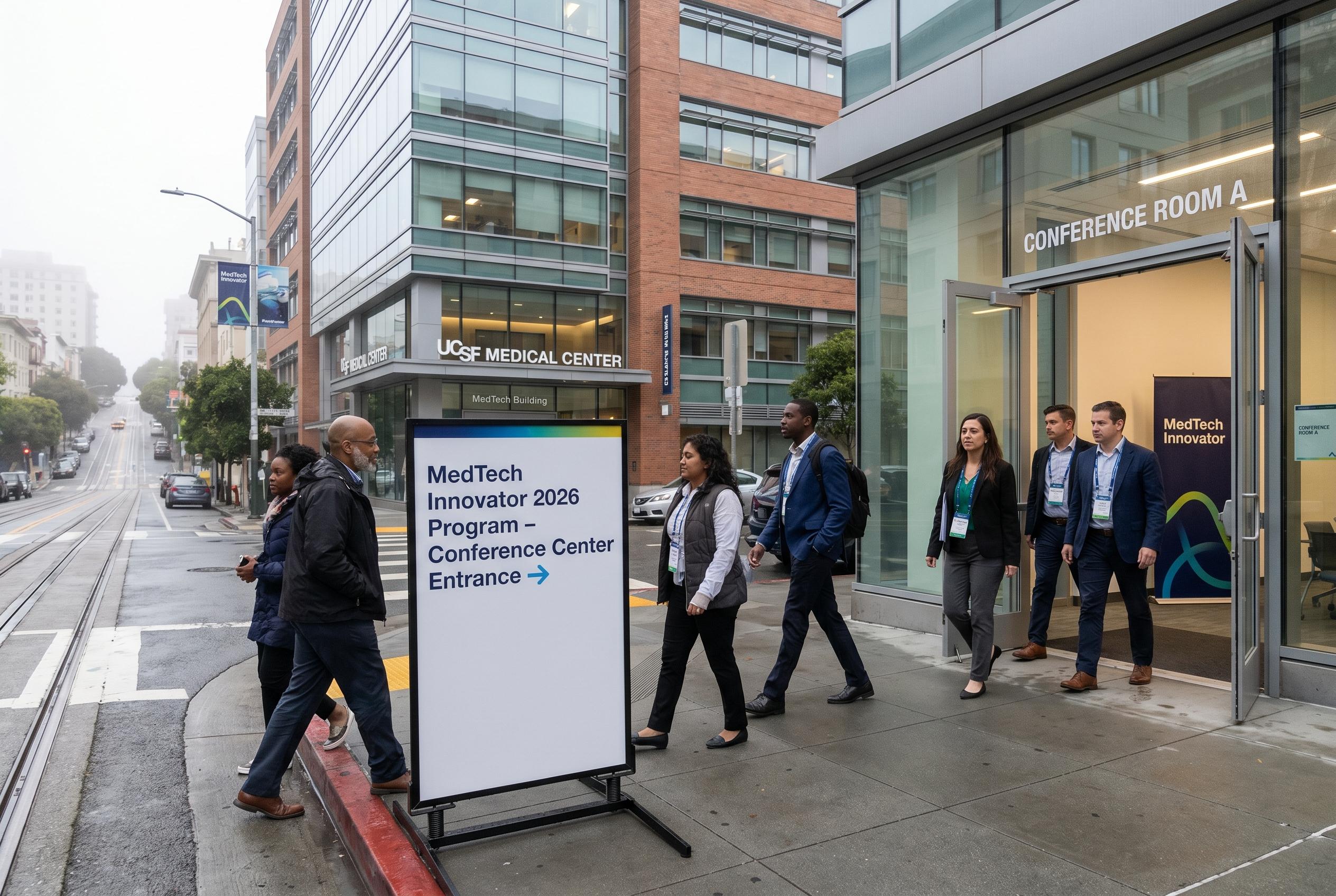
Shoppers of innovation, take note , Sequenex has teamed up with MedTech Innovator to give early-stage medtech companies the software muscle they need, helping wearable, CGM and biosensor startups move faster to market and improve patient outcomes. This partnership matters because it cuts friction around regulatory-ready, connected device development.
Essential Takeaways
- New partnership: Sequenex is a sponsor and hands-on partner with MedTech Innovator to support early- and growth-stage medtech firms.
- Software boost: Sequenex offers its prebuilt, customisable NEX platform for compliant connected-device software, helpful for CGM, wearables and biosensors.
- Scale and speed: The collaboration aims to shorten development timelines and streamline regulatory readiness, making products market-ready sooner.
- Programme reach: MedTech Innovator will select 65 startups for its 2026 accelerator after a competitive application process that drew record interest.
- Visible milestones: The accelerator runs through panels, a June Innovator Summit in San Francisco and culminates with finals in October, where companies pitch to partners and investors.
Why this partnership feels important now
This deal reads like a practical hand-up rather than just another sponsorship. Sequenex brings a tangible toolset , a compliant, scalable software platform , which smells faintly of relief for hardware-first startups that suddenly hit software and regulatory walls. MedTech Innovator has long been the place where investors and mentors meet early-stage companies, and adding a software partner with deep regulated-experience plugs a real gap.
MedTech Innovator is the largest accelerator focused on medical technology, and its 2026 cohort will include 65 companies selected from a deep pool. For a founder, having software that’s already engineered to be regulatory-ready can be the difference between another year spent on integration and a product that’s actually useful to patients.

What Sequenex is actually offering founders
Sequenex’s NEX platform is pitched as prebuilt and customisable, which means startups don’t need to reinvent the wheel for connectivity, data handling, or regulatory compliance. That’s especially valuable for continuous glucose monitoring (CGM) devices, biosensors and consumer wearables where data integrity and patient safety are non-negotiable.
According to Sequenex’s own service descriptions, they provide compliant software development and integration services , essentially taking on the heavy lifting startups dread. In practice, founders can expect faster prototyping, clearer regulatory pathways and a sturdier feel to their software stack.
How MedTech Innovator’s accelerator amplifies impact
MedTech Innovator runs a structured pathway: review, Radar Forum pitches, cohort selection, an invite-only Innovator Summit and a final competition in October. The accelerator connects startups to mentors, industry partners and investors, so the Sequenex offer slots into each stage , from early product validation to investment-ready demos.
The programme is highly competitive; recent rounds saw record applications, so being selected brings credibility as well as resources. For investors and hospital partners watching the MTI funnel, a startup backed by a partner providing regulatory-ready software looks less risky and more partnerable.
What founders should consider before signing up
This is great news, but founders should be pragmatic. Ask how much custom code you’ll still need, who owns the IP for integrations, and how the NEX platform handles data security and post-market software updates. Check timelines: the faster you can map your product to a platform, the more value you’ll extract from MTI mentorship and demo opportunities.
If you’re applying, get your regulatory story straight before you pitch , MTI reviewers want to see a concrete plan for safety and compliance. And remember, partnerships like this are about leverage: the platform speeds things up, but clinical validation, manufacturing and distribution still take focus and capital.
What this means for patients and the wider market
When startups move faster and more safely, patients win: better devices reach clinics sooner and can improve monitoring and outcomes. Industry-wide, this kind of partnership nudges the market toward integrated hardware-software ecosystems, where interoperability and secure connectivity are assumed rather than bolted on.
So expect to see more polished, connected devices emerging from accelerators in the coming year, and a clearer path from prototype to prescription-level reliability.
It’s a small change that can make every connected device launch smoother and, ultimately, more useful to patients.
Source Reference Map
Story idea inspired by: [1]
Sources by paragraph:
Noah Fact Check Pro
The draft above was created using the information available at the time the story first
emerged. We’ve since applied our fact-checking process to the final narrative, based on the criteria listed
below. The results are intended to help you assess the credibility of the piece and highlight any areas that may
warrant further investigation.
Freshness check
Score:
8
Notes:
The partnership announcement was published on May 1, 2026, with the earliest known publication date being May 1, 2026. ([biospace.com](https://www.biospace.com/press-releases/sequenex-announces-partnership-with-medtech-innovator-industrys-leading-startup-accelerator?utm_source=openai)) The content has been republished across various reputable sources, including BioSpace and Weekly Voice. ([biospace.com](https://www.biospace.com/press-releases/sequenex-announces-partnership-with-medtech-innovator-industrys-leading-startup-accelerator?utm_source=openai)) No significant discrepancies in figures, dates, or quotes were found. The narrative appears original and fresh.
Quotes check
Score:
7
Notes:
Direct quotes from John Krlin, CTO of Sequenex, and Paul Grand, CEO of MedTech Innovator, are included. ([biospace.com](https://www.biospace.com/press-releases/sequenex-announces-partnership-with-medtech-innovator-industrys-leading-startup-accelerator?utm_source=openai)) These quotes are consistent across multiple reputable sources. However, the absence of independent verification of these quotes raises some concern. ([biospace.com](https://www.biospace.com/press-releases/sequenex-announces-partnership-with-medtech-innovator-industrys-leading-startup-accelerator?utm_source=openai))
Source reliability
Score:
8
Notes:
The lead source, BioSpace, is a reputable platform for life sciences news. ([biospace.com](https://www.biospace.com/press-releases/sequenex-announces-partnership-with-medtech-innovator-industrys-leading-startup-accelerator?utm_source=openai)) The content has been republished across other reputable sources, including Weekly Voice. ([weeklyvoice.com](https://weeklyvoice.com/sequenex-announces-partnership-with-medtech-innovator-industrys-leading-startup-accelerator/?utm_source=openai)) No evidence suggests the content is recycled from low-quality sites or clickbait networks. The narrative appears to originate from a press release, which typically warrants a high freshness score.
Plausibility check
Score:
8
Notes:
The claims about the partnership between Sequenex and MedTech Innovator are plausible and align with industry trends. The narrative lacks specific factual anchors, such as detailed figures or dates, which could enhance credibility. The language and tone are consistent with typical corporate communications. No excessive or off-topic details are present. The tone is professional and appropriate for the subject matter.
Overall assessment
Verdict (FAIL, OPEN, PASS): FAIL
Confidence (LOW, MEDIUM, HIGH): MEDIUM
Summary:
While the partnership announcement between Sequenex and MedTech Innovator is plausible and aligns with industry trends, the lack of independent verification sources and the reliance on press releases and promotional content from the companies involved raise concerns about the reliability of the information. The absence of independent verification of direct quotes further diminishes confidence in the narrative’s accuracy. Therefore, the overall assessment is a FAIL with MEDIUM confidence.