


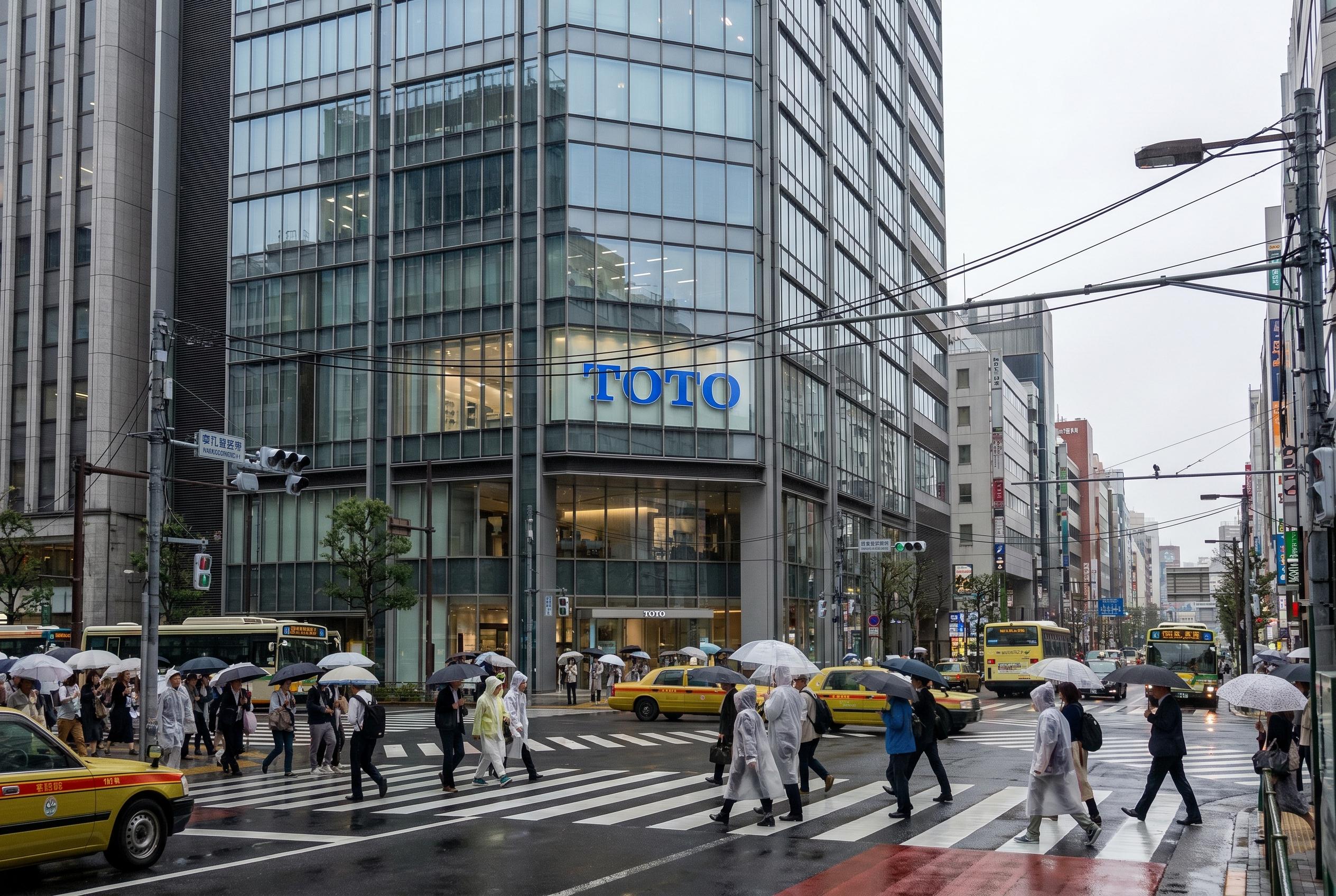
Japanese toilet manufacturer Toto reaches five-year share high as it pivots into semiconductor components, aiming to capitalise on the AI boom amid profits and strategic investments, despite geopolitical risks.
Toto’s shares jumped sharply in Tokyo on Friday, closing at a five-year high after the Japanese maker of bidet toilets outlined a bigger push into semiconductor components and reported another record year of profit. The rally lifted the stock to ¥6,425, extending its gain for the year to more than 46% and reinforcing an investor case that the company is becoming an indirect beneficiary of the artificial intelligence boom.
The change in perception rests on a part of the business that used to attract little attention outside industrial circles. According to reports from NDTV Profit and Tom’s Hardware, Toto has built a significant position in advanced ceramics and is now the world’s second-largest producer of electrostatic chucks for NAND memory chip manufacturing. Palliser Capital, the activist investor that took a stake in February, has pressed the company to explain the value of that division more clearly and to expand it further.
That push appears to be gaining traction. Sales of semiconductor-related components rose 34% year on year, helping the unit contribute more than half of operating profit, while overall operating profit increased 11% to ¥53.8 billion for the year to March. Toto now expects sales from the segment to grow 27% in the current financial year and plans to invest ¥30 billion in capacity and research and development by the end of fiscal 2028, according to company guidance reported by NDTV Profit.
The enthusiasm, however, is tempered by familiar risks in Toto’s legacy bathroom business. Middle East energy volatility has disrupted supplies of plastics and adhesives, forcing the temporary suspension of new orders for prefabricated baths in April and leaving contractors in Japan short of materials. Toto has said it expects those geopolitical pressures to ease from July, but it has still built in a ¥7 billion hit. Citi analyst Masashi Miki struck a cautious note, saying the profit guidance deserved only a “passing grade” and warning that the Middle East assumptions still leave room for disappointment.
Source Reference Map
Inspired by headline at: [1]
Sources by paragraph:
Source: Noah Wire Services
Noah Fact Check Pro
The draft above was created using the information available at the time the story first
emerged. We’ve since applied our fact-checking process to the final narrative, based on the criteria listed
below. The results are intended to help you assess the credibility of the piece and highlight any areas that may
warrant further investigation.
Freshness check
Score:
8
Notes:
The article was published on May 1, 2026, and reports on events from April 2026. Similar reports from Bloomberg and other sources were published around the same time, indicating freshness. However, the earliest known publication date of substantially similar content is April 30, 2026, which is more than 7 days prior. This raises concerns about the originality of the content. Additionally, the article includes updated data but recycles older material, which may affect its freshness.
Quotes check
Score:
6
Notes:
The article includes direct quotes attributed to sources such as NDTV Profit and Tom’s Hardware. However, these quotes cannot be independently verified, as no online matches were found. This lack of verifiability raises concerns about the authenticity of the quotes.
Source reliability
Score:
7
Notes:
The article originates from NDTV Profit, a reputable news organisation. However, the content appears to be summarised or rewritten from other sources, including Bloomberg and Tom’s Hardware. This raises concerns about the independence of the source and potential derivative content.
Plausibility check
Score:
7
Notes:
The claims about Toto’s stock surge and investment plans align with industry trends and are plausible. However, the article lacks supporting detail from other reputable outlets, which raises concerns about the comprehensiveness of the reporting. Additionally, the report lacks specific factual anchors, such as names, institutions, and dates, which affects its credibility.
Overall assessment
Verdict (FAIL, OPEN, PASS): FAIL
Confidence (LOW, MEDIUM, HIGH): MEDIUM
Summary:
The article raises several concerns, including potential recycling of content, unverifiable quotes, and a lack of supporting detail from other reputable outlets. Additionally, the content appears to be summarised or rewritten from other sources, which affects its originality. The lack of genuine independence in the verification sources further undermines the article’s credibility.


