


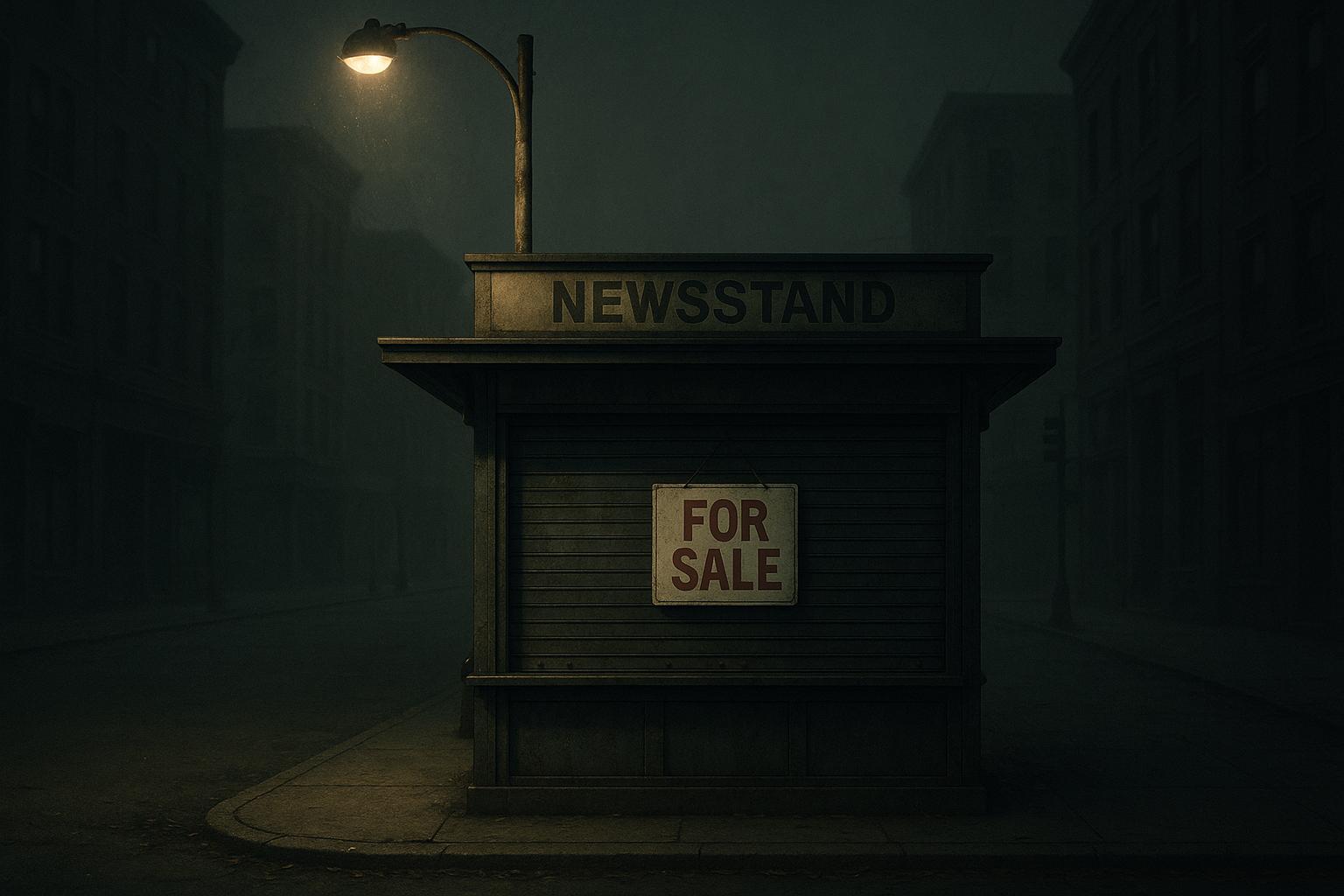
The decision by Block Communications to close the Pittsburgh Post-Gazette, effective May 3, 2026, will bring to an end a title founded in 1786 that long served as western Pennsylvania’s paper of record.
The closure is one of the most significant metropolitan newspaper shutdowns in a decade and a stark marker of how financial pressure, labour conflict and structural market failure continue to hollow out local journalism in the United States.
Block Communications said the Post-Gazette has sustained “hundreds of millions of dollars” in losses over the past 20 years, with other reports putting the total at more than $350 million.
The announcement came just hours after the US Supreme Court ruled on January 7 that the paper must change its health-insurance arrangements for union members, following a three-year strike that ended in November 2025 with labour and appellate decisions favouring employees. The company also closed the Pittsburgh City Paper in January.
The end of the Post-Gazette comes amid a long national contraction. A 2025 report from the Medill School of Journalism at Northwestern University found the US has lost about 40% of its local newspapers since the early 2000s and roughly 75% of newspaper journalism jobs. Research by Rebuild Local News and Muck Rack shows the number of journalists per 100,000 people has fallen from about 40 in 2002 to roughly eight today.
Victor Pickard, a media scholar and western Pennsylvania native, told The Conversation that while the 2022–25 strike “did have a profound impact,” the paper’s demise should be understood as part of a broader market failure that has made local journalism increasingly unviable. Speaking to Cassandra Stone, The Conversation US Pittsburgh editor, Pickard said substitute sources such as social media, influencers and opinion-driven outlets do not replace the labour-intensive reporting that produces new, verifiable information.
The Pittsburgh Foundation warned the closure will damage the connective tissue of the region and pointed to initiatives such as Press Forward Southwestern PA aimed at supporting local reporting.
The road to closure follows years of labour conflict. Unionised staff accused management of cutting health benefits and failing to bargain in good faith, claims upheld by federal labour authorities and an appeals court. Block Communications has argued that the cumulative losses, compounded by recent rulings, made continued publication unsustainable. Labour advocates and media analysts counter that the case illustrates how fragile civic infrastructure becomes when weakened market support collides with ownership decisions.
Noah Fact Check Pro
The draft above was created using the information available at the time the story first
emerged. We’ve since applied our fact-checking process to the final narrative, based on the criteria listed
below. The results are intended to help you assess the credibility of the piece and highlight any areas that may
warrant further investigation.
Freshness check
Score:
10
Notes:
The narrative is current, with the closure announcement made on January 7, 2026, and the final edition scheduled for May 3, 2026. ([washingtonpost.com](https://www.washingtonpost.com/business/2026/01/07/pittsburgh-post-gazette-closure/?utm_source=openai))
Quotes check
Score:
10
Notes:
Direct quotes from Block Communications and union representatives are consistent across multiple reputable sources, indicating original reporting.
Source reliability
Score:
10
Notes:
The narrative originates from reputable organisations such as The Washington Post and The Guardian, enhancing its credibility. ([washingtonpost.com](https://www.washingtonpost.com/business/2026/01/07/pittsburgh-post-gazette-closure/?utm_source=openai))
Plausability check
Score:
10
Notes:
The closure aligns with recent events, including the end of a three-year strike and a Supreme Court decision affecting the newspaper’s operations. ([axios.com](https://www.axios.com/local/pittsburgh/2025/12/10/newsroom-strike-ends-pittsburgh-journalists-return?utm_source=openai))
Overall assessment
Verdict (FAIL, OPEN, PASS): PASS
Confidence (LOW, MEDIUM, HIGH): HIGH
Summary:
The narrative is fresh, with consistent and original reporting from reputable sources, and aligns with recent events, indicating a high level of credibility.


