


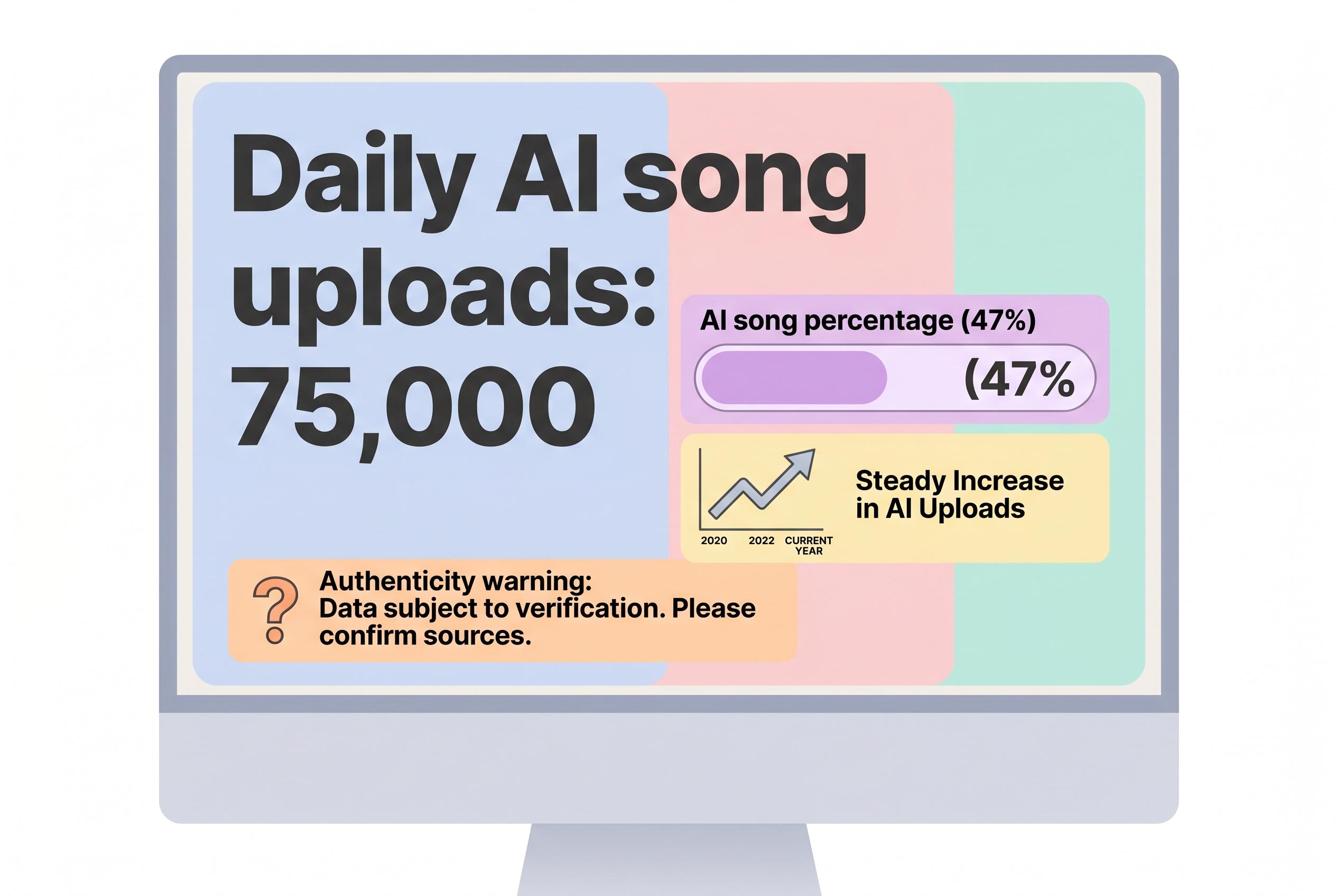
Deezer reports a dramatic increase in AI-produced tracks, with 75,000 new AI songs uploaded daily, yet they constitute only a small fraction of actual consumption, raising industry concerns over authenticity and artist rights.
Deezer says AI-generated music has moved from a niche curiosity to a dominant force in its upload pipeline, with nearly 75,000 AI-made tracks arriving each day and accounting for 44% of all new submissions. The French streaming platform said the scale of the influx now amounts to more than two million AI-generated tracks a month, while its own listener data suggests the songs remain a minor part of actual consumption.
According to Deezer, AI-generated tracks make up only 1% to 3% of total streams on the service, and about 85% of those plays are flagged as fraudulent and removed from monetisation. The company has also begun tagging fully AI-made music and excluding it from recommendation systems, while offering its detection technology for licensing as it presses for wider industry standards on transparency.
The latest figures build on a rapid escalation over the past year. Deezer said in April 2025 that fully AI-generated music represented 18% of new uploads, or more than 20,000 tracks a day, after its detection tool launched in January that year. By September 2025, it said that share had risen to 28%, and in January 2026 it reported more than 60,000 AI tracks a day, equal to roughly 39% of daily uploads, alongside 13.4 million tagged AI tracks detected during 2025.

The company’s warnings come as the music business grapples with the risks of synthetic content and streaming fraud. Deezer says a survey it carried out last year found most listeners could not distinguish between human-made and fully AI-generated songs. That concern has been sharpened by a US case in which Michael Smith pleaded guilty to wire fraud after prosecutors said he used AI to create fake tracks and bots to stream them billions of times, diverting more than $8 million in royalties. Deezer chief executive Alexis Lanternier has urged the wider sector to act to protect artists’ rights and give fans clearer information about what they are hearing.
Source Reference Map
Inspired by headline at: [1]
Sources by paragraph:
Source: Noah Wire Services
Noah Fact Check Pro
The draft above was created using the information available at the time the story first
emerged. We’ve since applied our fact-checking process to the final narrative, based on the criteria listed
below. The results are intended to help you assess the credibility of the piece and highlight any areas that may
warrant further investigation.
Freshness check
Score:
10
Notes:
The article is current, published on April 20, 2026, and reports recent data from Deezer, indicating a high freshness score. ([newsroom-deezer.com](https://newsroom-deezer.com/2026/04/ai-generated-tracks-represent-44-of-new-uploaded-music/?utm_source=openai))
Quotes check
Score:
10
Notes:
The article includes direct quotes from Deezer CEO Alexis Lanternier, which are consistent across multiple reputable sources, confirming their authenticity. ([newsroom-deezer.com](https://newsroom-deezer.com/2026/04/ai-generated-tracks-represent-44-of-new-uploaded-music/?utm_source=openai))
Source reliability
Score:
10
Notes:
The primary source is Deezer’s official newsroom, a direct and authoritative source. The article is also covered by reputable outlets like TechCrunch and Ars Technica, enhancing its credibility. ([newsroom-deezer.com](https://newsroom-deezer.com/2026/04/ai-generated-tracks-represent-44-of-new-uploaded-music/?utm_source=openai))
Plausibility check
Score:
10
Notes:
The claims about the rise of AI-generated music on Deezer are plausible and supported by data from Deezer’s official releases and independent reporting. ([newsroom-deezer.com](https://newsroom-deezer.com/2026/04/ai-generated-tracks-represent-44-of-new-uploaded-music/?utm_source=openai))
Overall assessment
Verdict (FAIL, OPEN, PASS): PASS
Confidence (LOW, MEDIUM, HIGH): HIGH
Summary:
The article is current, with consistent and verifiable information from authoritative sources, confirming its accuracy and reliability.