


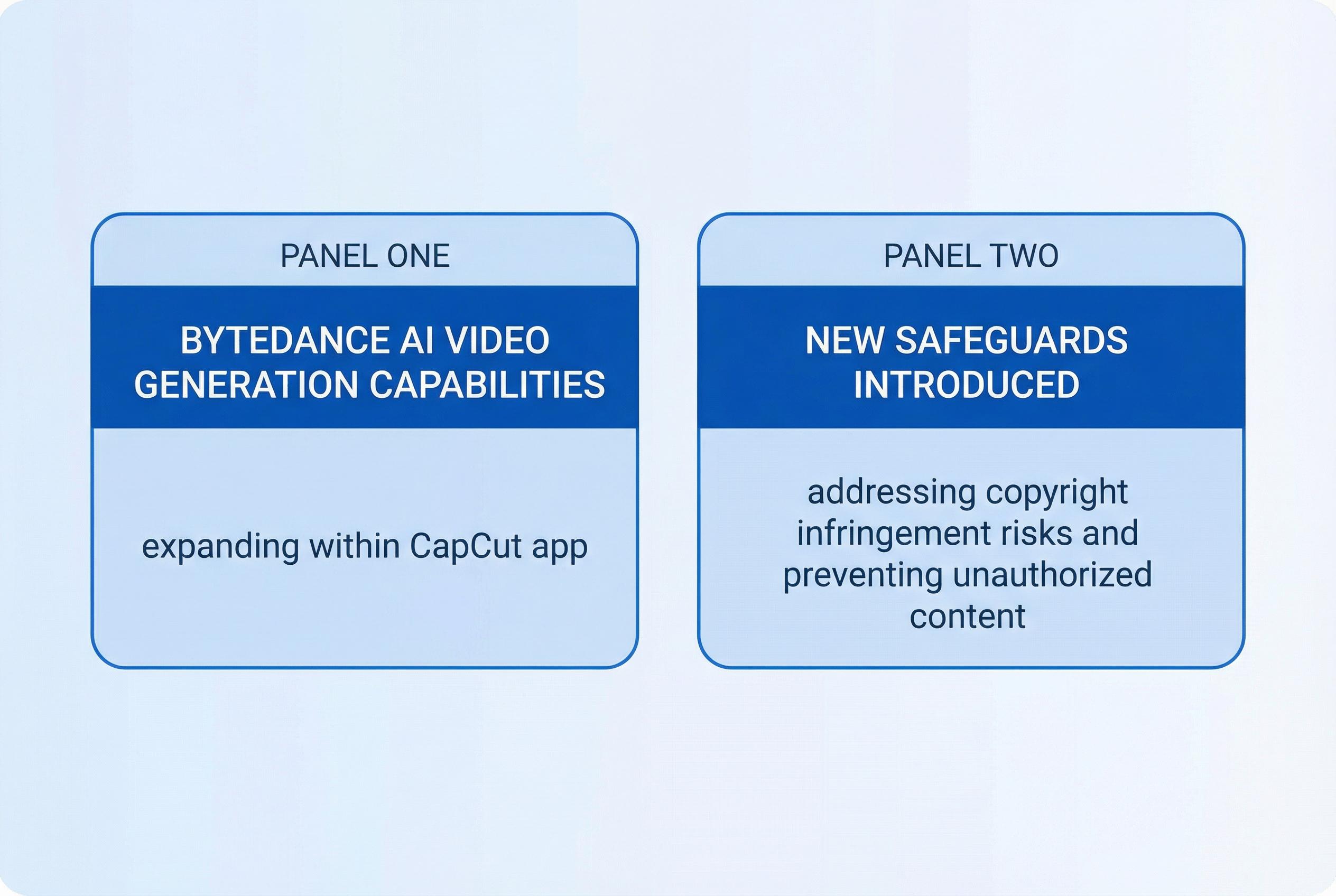
As ByteDance prepares to expand its AI video‑generation capabilities within the CapCut app, it pledges new safeguards to prevent copyright infringements and unauthorised content, responding to mounting industry and legal pressures.
ByteDance has moved to bolster intellectual property protections and other safety measures as it prepares to deploy an expanded AI video‑generation capability within its CapCut editing app, industry reporting shows. According to coverage by Advanced Television and Euronews, the company has signalled a more cautious international rollout after facing intense scrutiny over how its model replicates copyrighted characters and public figures. [2],[3]
The technology at the centre of the changes, various outlets identify as Seedance 2.0, is capable of producing highly realistic short videos from text prompts, images and other inputs, raising particular concerns when outputs resemble well‑known actors or trademarked characters. Reporting indicates the tool’s increasing realism has fuelled the debate over whether and how generative systems should be allowed to recreate protected works. [2],[4]
As part of its response ByteDance has said it will introduce technical measures intended to make AI‑generated media more traceable and to curb unauthorised uses. Media accounts describe stepped‑up monitoring and enforcement routines and other controls that aim to detect and prevent infringement at scale. Industry coverage also reports the company is exploring watermarking and provenance systems to help identify content created by the model even after it has been edited or redistributed. [5],[4]

The vendor also plans rule‑based limits on producing material that reproduces copyrighted content or the likenesses of real people without permission, according to multiple reports. Those restrictions are framed as an attempt to reduce misuse while the company scales the feature to more markets and users. Observers say operationalising such limits will be technically and legally complex. [3],[7]
The push for safeguards follows legal threats and public criticism from major studios and trade groups, including complaints from Disney, Paramount and the Motion Picture Association, which accused the model of generating unauthorised depictions of their characters and talent. Reporting by Advanced Television, TechXplore and The Wrap documents those industry responses and the pressure they applied on ByteDance to act. [2],[5],[7]
The episode highlights a wider tension confronting tech firms and creative industries: how to permit innovative tools that lower barriers to video production while respecting copyright and personality rights. Analysts and legal observers quoted in the coverage say the outcome will hinge on a mix of robust technical provenance, clear policy enforcement and evolving regulation across jurisdictions. [4],[6]
Source Reference Map
Inspired by headline at: [1]
Sources by paragraph:
Source: Noah Wire Services
Noah Fact Check Pro
The draft above was created using the information available at the time the story first
emerged. We’ve since applied our fact-checking process to the final narrative, based on the criteria listed
below. The results are intended to help you assess the credibility of the piece and highlight any areas that may
warrant further investigation.
Freshness check
Score:
8
Notes:
The article was published on March 30, 2026, which is recent. However, the content heavily references earlier reports from February 2026, indicating that the core information is not entirely fresh. ([techcrunch.com](https://techcrunch.com/2026/03/15/bytedance-reportedly-pauses-global-launch-of-its-seedance-2-0-video-generator/?utm_source=openai))
Quotes check
Score:
7
Notes:
The article includes direct quotes from various sources. However, without access to the original articles, it’s challenging to verify the accuracy and context of these quotes. ([techcrunch.com](https://techcrunch.com/2026/03/15/bytedance-reportedly-pauses-global-launch-of-its-seedance-2-0-video-generator/?utm_source=openai))
Source reliability
Score:
6
Notes:
The article cites multiple sources, including reputable outlets like TechCrunch and Euronews. However, the CXO Digitalpulse website is not widely recognized, which raises concerns about the independence and credibility of the reporting. ([techcrunch.com](https://techcrunch.com/2026/03/15/bytedance-reportedly-pauses-global-launch-of-its-seedance-2-0-video-generator/?utm_source=openai))
Plausibility check
Score:
9
Notes:
The claims about ByteDance implementing IP safeguards in response to legal threats from Hollywood studios are plausible and align with previous reports. ([theguardian.com](https://www.theguardian.com/technology/2026/feb/16/tiktok-bytedance-ai-video-tool-disney-seedance-tom-cruise-brad-pitt?utm_source=openai))
Overall assessment
Verdict (FAIL, OPEN, PASS): FAIL
Confidence (LOW, MEDIUM, HIGH): MEDIUM
Summary:
The article presents information that is largely based on earlier reports from February 2026, with limited new content. The reliance on a less recognized source, CXO Digitalpulse, and the inability to verify quotes and some details independently, raise concerns about the article’s credibility and freshness. ([techcrunch.com](https://techcrunch.com/2026/03/15/bytedance-reportedly-pauses-global-launch-of-its-seedance-2-0-video-generator/?utm_source=openai))