


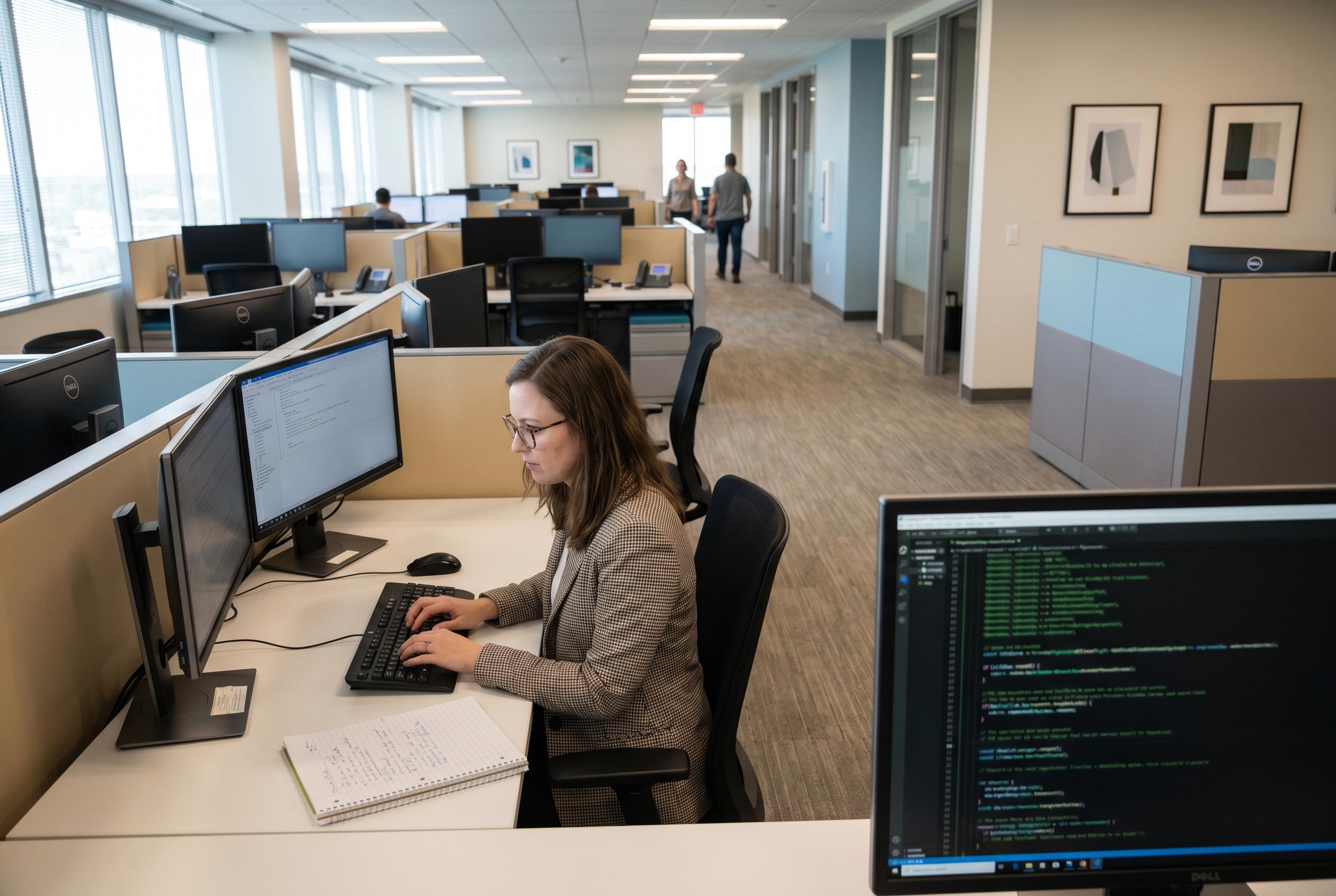
Shoppers of tech are watching insurers shift to conversational AI, Verisk and Anthropic have linked analytics into Claude so underwriters and claims teams can query authoritative insurance data in plain English, right inside enterprise AI platforms, cutting clicks and speeding decisions.
Essential Takeaways
- Integrated access: Verisk’s analytics are available inside Anthropic’s Claude via MCP connectors, so users can query datasets conversationally.
- Practical use cases: Underwriting intelligence and XactRestore claims pricing are early examples, offering loss-cost trends and repair‑estimate visibility.
- Governed environment: The integration is built to respect enterprise controls, compliance and human oversight, with professionals retaining accountability.
- Efficiency gains: Removing platform switching aims to speed workflows, reduce friction and surface data-backed answers faster.
- Trusted data: Verisk’s established datasets, including ISO feeds, underpin answers so outputs remain tied to authoritative sources.
Why this feels like a small revolution for underwriting
Ask any underwriter and they’ll tell you the pain of hunting across dashboards for a single rate table, it’s tedious and breaks momentum. Embedding Verisk into Claude promises a smoother, quieter experience: conversational queries that return context-rich analytics without tab switching, and a calmer workflow with fewer interruptions. According to industry briefings, this was built precisely to plug those friction points, giving users loss-cost trends and filing signals via dialogue rather than search.
How the MCP connector actually works (and why it matters)
Anthropic’s Model Context Protocol connectors are the plumbing that lets a language model reach out to external data securely. In practice, that means Claude can call Verisk’s analytics, pull structured results and present them in a human-friendly answer. Providers say it’s engineered for enterprise governance, so you get the conversational interface without sacrificing controls, audit trails or regulatory needs. For teams worried about “black box” AI, that blend of openness and oversight is a clear selling point.
Underwriting and claims use cases you can try tomorrow
Early applications are refreshingly concrete. Underwriters can query loss-cost trends or regional filing signals during pricing discussions, while claims teams can ask XactRestore for repair pricing and estimates to speed settlements. Insurers told reporters these scenarios reduce back-and-forth with rate tables and help surface explainable inputs for decisions. If you manage teams, start by mapping the top five repetitive data pulls you do today, those are the low-hanging fruit for conversational access.
Safety, compliance and the human-in-the-loop promise
Trust is critical in insurance, and Verisk’s leadership frames this integration as augmenting professionals, not replacing them. The system is designed to operate inside corporate governance: existing controls, compliance checks and human sign-off remain intact. That means firms must still own final decisions, but they get faster, data-supported drafts and summaries. In short, it’s a productivity tool with guardrails, not an autonomous decision-maker.
What this signals for insurers and the wider market
Embedding authoritative analytics into LLMs reflects a broader shift: insurers want smarter interfaces rather than new, separate tools. By positioning data where conversations happen, Verisk and Anthropic are betting on adoption through convenience. Expect competitors to push similar integrations and a faster move towards conversational workflows across pricing, underwriting and claims. For insurers, the practical question is less “if” and more “how quickly can we connect our processes.”
It’s a small change that can make every data-led decision feel a little more human.
Source Reference Map
Story idea inspired by: [1]
Sources by paragraph:
Noah Fact Check Pro
The draft above was created using the information available at the time the story first
emerged. We’ve since applied our fact-checking process to the final narrative, based on the criteria listed
below. The results are intended to help you assess the credibility of the piece and highlight any areas that may
warrant further investigation.
Freshness check
Score:
8
Notes:
The article was published on May 6, 2026, reporting on Verisk’s integration of analytics into Anthropic’s Claude AI platform via Model Context Protocol (MCP) connectors. The earliest known publication date of this information is May 5, 2026, from GlobeNewswire. The narrative appears original, with no evidence of recycling or republishing across low-quality sites. However, the article includes a direct quote from Lee Shavel, president and CEO of Verisk, which is also present in the GlobeNewswire release. This suggests the article may be based on the press release, which typically warrants a high freshness score. Nonetheless, the presence of identical quotes raises concerns about the originality of the content.
Quotes check
Score:
6
Notes:
The article includes a direct quote from Lee Shavel, president and CEO of Verisk: “Trust is the foundation of insurance, and that doesn’t change as new technologies emerge.” This quote is also present in the GlobeNewswire release. The identical wording suggests potential reuse of content. No online matches were found for other quotes, indicating they cannot be independently verified. The lack of verifiable quotes raises concerns about the credibility of the information presented.
Source reliability
Score:
7
Notes:
The article originates from FinTech Global, a niche publication focusing on financial technology news. While it is reputable within its niche, its reach and influence are limited compared to major news organisations. The article cites a press release from GlobeNewswire, a reputable source. However, the reliance on a single source for the majority of the content raises concerns about the independence and reliability of the information presented.
Plausibility check
Score:
8
Notes:
The claims about Verisk integrating its analytics into Anthropic’s Claude AI platform via MCP connectors are plausible and align with industry trends towards AI integration in the insurance sector. The article provides specific details about the integration, including the use cases for underwriting and restoration. However, the lack of independent verification and reliance on a single source for these claims reduces the overall credibility of the information.
Overall assessment
Verdict (FAIL, OPEN, PASS): FAIL
Confidence (LOW, MEDIUM, HIGH): MEDIUM
Summary:
The article reports on Verisk’s integration of analytics into Anthropic’s Claude AI platform via MCP connectors. While the claims are plausible and align with industry trends, the heavy reliance on Verisk’s press release, the inclusion of direct quotes without independent verification, and the lack of independent verification sources raise significant concerns about the originality, independence, and reliability of the information presented. These issues prevent the content from meeting our verification standards.


