


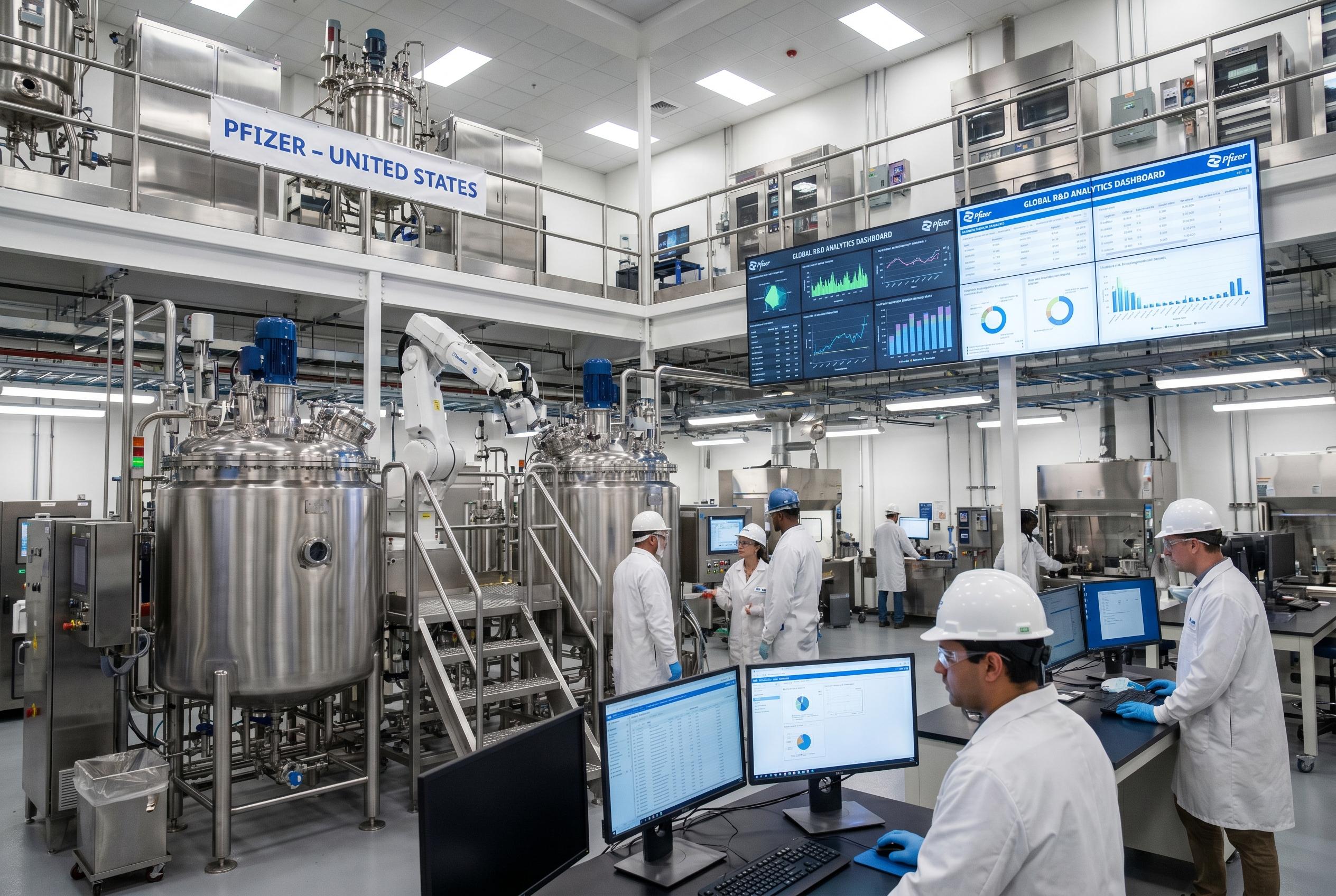
Shoppers of healthcare innovation are watching Pharma 4.0 surge: manufacturers, biotechs and CROs are adopting cloud, AI and automation to speed drug discovery, cut waste and support personalised medicine , and the market is forecast to hit tens of billions by 2030, changing how medicines are made and delivered.
Essential Takeaways
- Big market growth: Pharma 4.0 is forecast to expand rapidly, driven by cloud, AI, IoT and automation investments.
- Key use-cases: Drug discovery, clinical trials and manufacturing are the main applications bringing immediate ROI.
- Sensory payoff: Expect cleaner, quieter factories, real-time dashboards and fewer batch failures.
- Who’s leading: Tech giants, pharma incumbents and specialised vendors are partnering to deliver integrated platforms.
- Practical win: Cloud-hosted discovery tools let dispersed teams collaborate securely with a minimal local footprint.
Why Pharma 4.0 feels like a production revolution
Pharma 4.0 is less sci‑fi and more factory floor reboot, with sensors, robots and cloud platforms giving operations a sleeker, quieter feel. Manufacturers are swapping periodic checks for continuous monitoring, which means real-time quality data instead of waiting for end‑of‑line tests.
The shift has been pushed by regulatory pressure to improve traceability and by commercial appetite for smaller, faster production runs , useful when making personalised or small-batch therapies. For patients that can mean quicker access to complex medicines.
If you run a plant, the takeaway is simple: digital systems reduce surprises. Start by mapping your most error‑prone processes and test sensors or MES upgrades in a single line before scaling up.
Cloud and AI are where discovery meets agility
Cloud-based drug‑discovery platforms are changing how chemists and model‑makers work, because they let teams access powerful tools from anywhere without huge local servers. Optibrium’s cloud StarDrop release is a neat example of this trend, offering the same features as desktop software but with remote access and enterprise security.
Researchers say the practical upside is faster iteration and easier collaboration across sites; IT teams welcome centralised updates and ISO‑grade security. For smaller biotechs, that means enterprise‑grade capabilities without the capital outlay.
If you’re choosing a platform, check hosting credentials, encryption standards and whether the provider supports collaborative workflows that match how your scientists actually work.

Manufacturing: continuous processing, fewer surprises
Continuous manufacturing is one of the clearest Pharma 4.0 wins , it replaces batch stops and starts with steady flows controlled by PLCs, SCADA and predictive analytics. The result is smoother output, less waste and often a smaller physical footprint.
Companies that adopt continuous lines can also fold in predictive maintenance to avoid unplanned downtime; sensors flag issues before they escalate. That’s a morale booster on the shop floor as much as a balance‑sheet benefit.
Start small: pilot continuous tech on a well‑understood product, measure stability and regulatory traceability, then expand. Regulators increasingly expect manufacturers to demonstrate robust digital controls, so early adopters gain a compliance edge.
Supply chains and traceability: visibility you can trust
Pharma 4.0 brings better visibility across complex, global supply chains , everything from raw material provenance to cold‑chain status. Enhanced traceability lowers the risk of recalls and helps firms respond faster to shortages or quality questions.
Technology players and pharma firms are building integrated stacks that combine ERP, SCM software and blockchain‑style ledgers to create auditable trails. The sensory picture here is operational calm: fewer surprises, clearer dashboards and steadier planning.
If you manage procurement, prioritise systems that integrate with your existing ERP and offer APIs for partners, so data flows without constant manual reconciliation.
People and skills: the quieter revolution
All the technology in the world won’t help if people aren’t trained to use it. Pharma 4.0 calls for new roles and collaboration between engineers, data scientists and manufacturing teams; workforce development is as critical as any PLC upgrade.
Companies that invest in training and in change management see faster adoption and more creative uses of their tools. Expect job descriptions to blend biology, automation and data literacy.
Practical tip: run cross‑functional workshops and short secondments so operators understand data dashboards and data teams understand shop‑floor constraints.
Closing line
It’s not a rip‑and‑replace , Pharma 4.0 is a stepwise modernisation that makes drug production smarter, safer and more adaptable; choose pilot projects wisely and scale what measurably improves quality.
Source Reference Map
Story idea inspired by: [1]
Sources by paragraph:
Noah Fact Check Pro
The draft above was created using the information available at the time the story first
emerged. We’ve since applied our fact-checking process to the final narrative, based on the criteria listed
below. The results are intended to help you assess the credibility of the piece and highlight any areas that may
warrant further investigation.
Freshness check
Score:
4
Notes:
The article was published on 4 May 2026, which is recent. However, the content heavily references a press release from The Business Research Company, dated 4 May 2026, indicating potential recycling of information. Additionally, similar narratives have appeared in previous reports from Grand View Research and PharmiWeb.com, published in 2024 and 2025, respectively, suggesting that the core information may not be original. ([grandviewresearch.com](https://www.grandviewresearch.com/press-release/global-pharma-4-market?utm_source=openai))
Quotes check
Score:
3
Notes:
The article includes direct quotes from The Business Research Company’s press release. However, these quotes cannot be independently verified, as they originate from a press release, which is inherently biased and promotional. No external sources corroborate these statements, raising concerns about their authenticity.
Source reliability
Score:
4
Notes:
The primary source, The Business Research Company, is a market research firm that produces reports for commercial purposes. Such sources often have vested interests in promoting their findings, which can lead to biased or unverified information. The article also references other market research firms like Grand View Research and PharmiWeb.com, which have their own potential biases.
Plausibility check
Score:
5
Notes:
The claims about the Pharma 4.0 market’s growth and technological advancements are plausible and align with industry trends. However, the lack of independent verification and reliance on potentially biased sources diminishes the credibility of these claims.
Overall assessment
Verdict (FAIL, OPEN, PASS): FAIL
Confidence (LOW, MEDIUM, HIGH): HIGH
Summary:
The article heavily relies on a press release from The Business Research Company, dated 4 May 2026, which is inherently biased and promotional. Similar narratives have appeared in previous reports from other market research firms, suggesting a lack of originality. The quotes included cannot be independently verified, and the primary source has a vested interest in promoting its findings. The lack of independent verification and reliance on potentially biased sources significantly diminish the credibility of the information presented.