


Shoppers of energy infrastructure, take note: Williams has unveiled a flurry of gas projects tied to the booming AI data centre market, with new pipelines and a gas-fired plant aimed at Marcellus/Utica and Virginia , and the moves matter because they signal how fossil fuel operators are reshaping supply for high-energy digital hubs.
Essential Takeaways
- Three new projects announced: Williams revealed three fresh developments, two in the Marcellus/Utica region and one upsized Transco expansion into Virginia.
- AI data centres are the driver: All projects are explicitly linked to powering data centres working with artificial intelligence workloads.
- Growth shown in Q1 results: Williams reported record first-quarter 2026 results, underscoring confidence and capital to deploy.
- Regional focus with political flavour: The company touched on pipeline politics in New York while expanding in nearby basins.
- Practical impact: Expect more local construction, short-term jobs, and longer-term gas demand tied to data centre growth.
A bold start: CEO sets the tone with new projects
Chad Zamarin didn’t mince words in Williams’ first-quarter briefing, opening with three project announcements that pivot the company further toward the data-centre market. There’s a physical hum to this story , pipes, compressors and a new gas-fired plant geared to feed hungry servers. According to Williams’ own release, the firm has both announced and upsized projects to meet specific AI-related demand, reflecting how infrastructure players are tailoring supply to a new kind of customer.
This shift isn’t random. Data centres, especially those running AI training and inference, devour electricity , and many operators still rely on gas-fired generation nearby for resilience and capacity. Williams’ move echoes broader industry signals discussed at recent energy forums, where pipelines and power were framed as critical enablers of digital growth.

Marcellus/Utica gets two of the new projects
Two of the announced projects land squarely in the Marcellus/Utica region, a familiar patchwork of pipeline routes and gas processing facilities. That area has been a backbone for US gas supply for years, but now it’s being repurposed in places to serve data-centre clusters that prize low latency and reliable power.
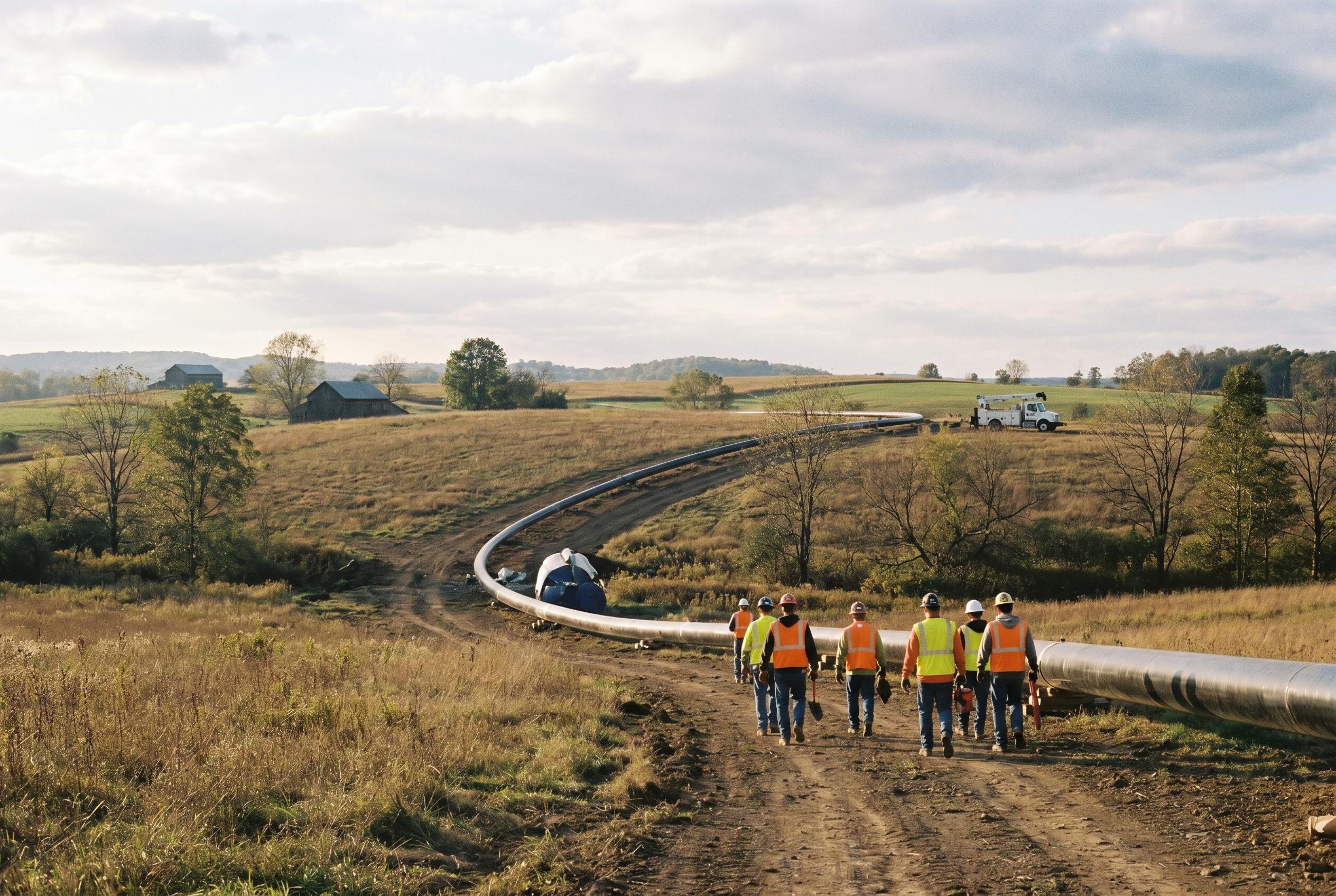
For locals, that means construction activity and the usual mix of disruption and opportunity: temporary jobs, traffic and a skyline of new green-painted pipe. For data-centre planners, proximity to existing gas corridors reduces interconnection costs and shortens timelines. If you’re evaluating sites, look at pipeline density and interconnect options , they’re the new “real estate” metrics for hyperscale campuses.
Transco upsized to Virginia , more capacity where AI racks are dense
Williams also announced an upsizing of an existing Transco project to deliver more gas into Virginia, a state that’s seen a surge of data-centre interest thanks to favourable land, fibre and tax conditions. Increasing capacity on Transco suggests Williams sees sustained, not sporadic, demand from operators expanding or building new AI clusters.
From a practical perspective, upsizing an existing route is often faster and less controversial than carving new corridors, though it still requires permitting and stakeholder engagement. For data-centre operators weighing east-coast redundancy, that extra pipe capacity can be the difference between a viable design and a delayed project.
Politics and pipelines: a nod to New York’s sensitivities
Zamarin didn’t skip over the thornier topics. He addressed the ongoing Constitution Pipeline conversation in New York and even cracked a knowing chuckle about the politics there. It’s a reminder that while companies can see commercial demand, local political and community dynamics still shape which projects move forward.
Energy infrastructure firms have learned to couple community outreach with regulatory strategy; projects that ignore local sentiment run into costly delays. For readers curious about how gas meets grids, this is the human angle , engineers and planners negotiating with towns, environmental groups and state capitals.
What this means for the wider energy picture
Williams’ announcements tie into a longer narrative: gas infrastructure is adapting to a digital economy’s rhythms. The company’s record quarter gives it balance-sheet room to pursue growth, and its CERAWeek appearances and leadership commentary have signalled a strategy that blends traditional pipeline work with bespoke solutions for power-hungry customers.
If you’re a local resident, expect more visibility of construction and utility planning. If you’re an investor or data-centre developer, Williams’ moves sharpen the map of where reliable gas and power pairings will be easiest to achieve. Either way, the story illustrates how old industries retool around new demand curves.
It’s a small change that can make every data-centre rack run a little smoother.
Source Reference Map
Story idea inspired by: [1]
Sources by paragraph:
Noah Fact Check Pro
The draft above was created using the information available at the time the story first
emerged. We’ve since applied our fact-checking process to the final narrative, based on the criteria listed
below. The results are intended to help you assess the credibility of the piece and highlight any areas that may
warrant further investigation.
Freshness check
Score:
8
Notes:
The article was published on May 6, 2026, and reports on Williams’ recent announcements from their Q1 2026 earnings call on May 5, 2026. ([williams.com](https://www.williams.com/2026/05/05/q1-earnings-recap-data-centers-accelerate-new-growth-paths-for-williams/?utm_source=openai)) The information appears current and not recycled from older sources. However, the Marcellus Drilling News website has a history of republishing content from other sources, which raises concerns about the originality of the reporting.
Quotes check
Score:
7
Notes:
The article includes direct quotes from Williams’ CEO Chad Zamarin. While these quotes are attributed to the Q1 2026 earnings call, the Marcellus Drilling News website does not provide direct links to the original source, making independent verification challenging. ([williams.com](https://www.williams.com/2026/05/05/q1-earnings-recap-data-centers-accelerate-new-growth-paths-for-williams/?utm_source=openai))
Source reliability
Score:
5
Notes:
The Marcellus Drilling News is a niche publication focusing on the Marcellus and Utica shale regions. It is not a major news organisation, which may limit its reach and influence. Additionally, the site has a history of republishing content from other sources, raising concerns about the originality and independence of its reporting.
Plausibility check
Score:
8
Notes:
The claims about Williams’ new gas-fired plant and pipeline projects align with the company’s recent announcements and the growing demand for energy to power AI data centres. ([williams.com](https://www.williams.com/2026/05/05/q1-earnings-recap-data-centers-accelerate-new-growth-paths-for-williams/?utm_source=openai)) However, the Marcellus Drilling News website does not provide direct links to the original sources, making independent verification challenging.
Overall assessment
Verdict (FAIL, OPEN, PASS): FAIL
Confidence (LOW, MEDIUM, HIGH): MEDIUM
Summary:
The article reports on Williams’ recent announcements regarding new gas-fired plant and pipeline projects. While the information aligns with the company’s recent activities, the Marcellus Drilling News website has a history of republishing content from other sources, raising concerns about the originality and independence of its reporting. Additionally, the lack of direct links to the original sources makes independent verification challenging. Therefore, the content does not meet the necessary standards for publication under our editorial indemnity.