


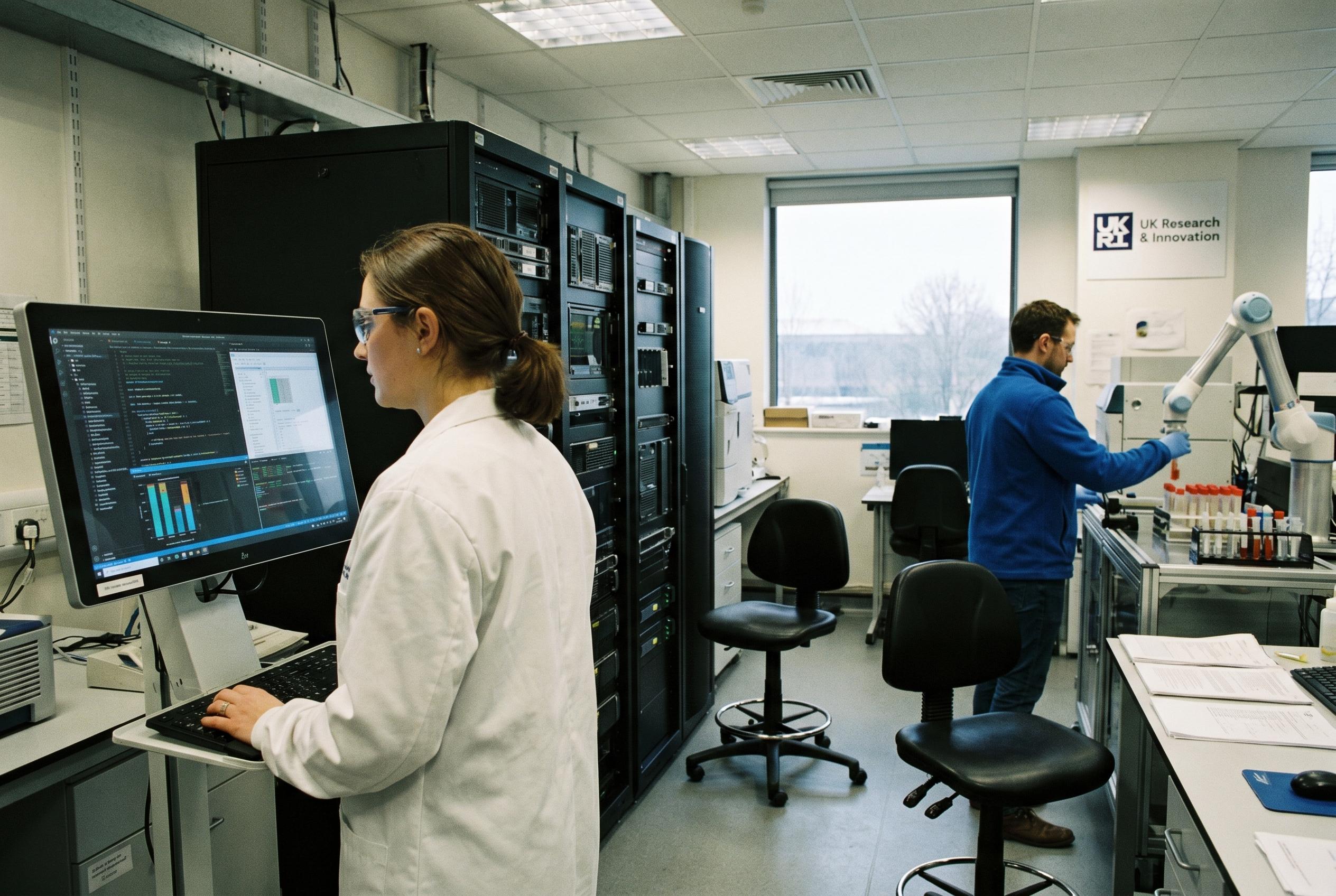
Shoppers are turning to smarter lab kit as drug discovery labs push for speed, consistency and scale; the latest automation tech , from AI-enabled genomics tools to robotic liquid handlers , promises faster screens, fewer errors and a clearer path from experiment to insight.
Essential Takeaways
- Market momentum: Lab automation for drug discovery is forecast to expand significantly, driven by AI integration and wider adoption of automated liquid handling.
- Genomics meets AI: New tools analysing long‑read sequencing and non‑coding DNA are speeding diagnosis and target discovery with a quieter, sleeker data workflow.
- Robots and reproducibility: Vendors are launching workstations that cut hands‑on time and deliver more consistent results , they feel sturdy and reduce tedium.
- Partnership power: Big collaborations between AI platform firms and pharma are increasing compute capacity and bringing specialised talent to bear faster.
- Practical choice tip: When picking automation, prioritise interoperability, throughput needs and ease of validation to avoid late surprises.
Why lab automation still matters , and it’s not just about speed
Lab benches that hum with robotics and quiet liquid handlers have a very tactile appeal: they free researchers from repetitive, fiddly tasks and give experiments a more consistent, clinical rhythm. According to market research, demand for these systems is climbing as companies seek to shorten discovery cycles and improve reproducibility. For lab managers that translates into fewer late nights pipetting and more predictable runs, which matters when every assay counts.
The backdrop isn’t without friction. Pricing shifts and trade changes in big markets have created cautious budgets, but labs continue to invest selectively in automation that demonstrably reduces hands‑on time and error rates. So rather than wholesale upgrades, many facilities are opting for targeted modules that slot into existing workflows.
Which technologies are steering the growth curve?
Automated liquid handling, high‑throughput screening and laboratory robotics are the bread and butter, but artificial intelligence and machine learning are the secret sauce. Industry analysts highlight acoustic liquid handling and modular automation as fast‑growing segments, paired with software that ties experiments to data pipelines. The result is systems that not only move liquids precisely but also learn from past runs to improve future performance.
For practical buyers, think in terms of throughput and scale: if you run thousands of samples a week, prioritise speed and deck capacity; if your priority is complex assays, choose flexible, modular platforms that support custom protocols.
Genomics and AI: where the most visible progress is happening
Genomics has become a poster child for automation because sequencing generates mountains of data that need reliable, repeatable pre‑analytical processing. New AI tools are being used to interpret long‑read sequences and the so‑called “dark matter” of non‑coding DNA, helping researchers pin down cancer‑linked variants and regulatory elements faster. These platforms don’t just crunch numbers; they change the way decisions are made in the lab, turning raw reads into actionable leads.
For lab teams, the takeaway is simple: integrating AI into genomics pipelines means investing in both compute and staff training. The tech can turbocharge discovery, but only if your team trusts the outputs and the system is validated for clinical or regulatory purposes.
Product launches that tackle the everyday grind
Vendors keep shipping gear designed to shave off menial tasks , automated assay workstations that replace repetitive handling, for instance, and liquid handlers that feel more reliable and are easier to clean than previous generations. The pitch is familiar: reduce variability, free up scientists for high‑value work, and roll out consistent protocols across sites.
When evaluating new equipment, look beyond specs. Check how easy it is to qualify in your lab, how consumables are sourced, and whether the vendor supports remote diagnostics. A modest premium for service and integration can save weeks of downtime later.
Collaborations are expanding compute and capability
Large alliances between AI platform companies and pharma groups are changing the scale of what’s possible. Partnerships that combine massive compute investments with specialist drug discovery know‑how are enabling continuous learning cycles where every experiment improves the next one. That means faster model training, quicker hypothesis testing and ultimately a tighter feedback loop from bench to algorithm.
This trend also changes procurement logic: labs now think about ecosystem fit, not just hardware. Will the instrument play nicely with cloud platforms and AI toolchains? If so, it’s a stronger long‑term bet.
How to choose automation without getting locked in
Start with needs, not features. Map your current bottlenecks , throughput, variability, or reproducibility , and pick systems that target those problems. Prioritise interoperability so you can mix and match modules, and insist on clear validation data and service agreements. For teams worried about budgets, modular upgrades let you spread cost and adapt as priorities shift.
And don’t forget the human side: automation works best when staff are trained to interpret outputs, maintain instruments, and spot when systems drift.
It’s a small change that can make every experiment safer, faster and more repeatable.
Source Reference Map
Story idea inspired by: [1]
Sources by paragraph:
Noah Fact Check Pro
The draft above was created using the information available at the time the story first
emerged. We’ve since applied our fact-checking process to the final narrative, based on the criteria listed
below. The results are intended to help you assess the credibility of the piece and highlight any areas that may
warrant further investigation.
Freshness check
Score:
7
Notes:
The article was published on 7 May 2026. Recent developments in lab automation, such as Insilico Medicine’s announcement of LabClaw on 6 May 2026 ([eurekalert.org](https://www.eurekalert.org/news-releases/1127117?utm_source=openai)), suggest that the content is current. However, the article’s reliance on sources from 2025 raises concerns about the freshness of some information.
Quotes check
Score:
6
Notes:
The article includes direct quotes from Lin Sha, Senior Director of IT at Insilico Medicine, and Alex Zhavoronkov, PhD, Founder and CEO of Insilico Medicine. A search for these quotes did not yield earlier appearances, indicating they may be original. However, without independent verification, the authenticity of these quotes cannot be confirmed.
Source reliability
Score:
6
Notes:
The article is published on ddw-online.com, a niche publication focusing on drug discovery and development. While it provides in-depth coverage of the field, its limited reach and potential for bias due to its specialized focus may affect the reliability of the information presented.
Plausibility check
Score:
7
Notes:
The article discusses advancements in lab automation, including AI integration and automated liquid handling, which align with current industry trends. However, the lack of supporting details from other reputable outlets and the absence of specific factual anchors raise questions about the article’s credibility.
Overall assessment
Verdict (FAIL, OPEN, PASS): FAIL
Confidence (LOW, MEDIUM, HIGH): MEDIUM
Summary:
The article presents information on lab automation advancements, but concerns about the freshness of some content, unverified quotes, reliance on a niche source, and lack of supporting details from other reputable outlets lead to a ‘FAIL’ assessment. The absence of independent verification and potential biases in the source further diminish the article’s credibility.


