


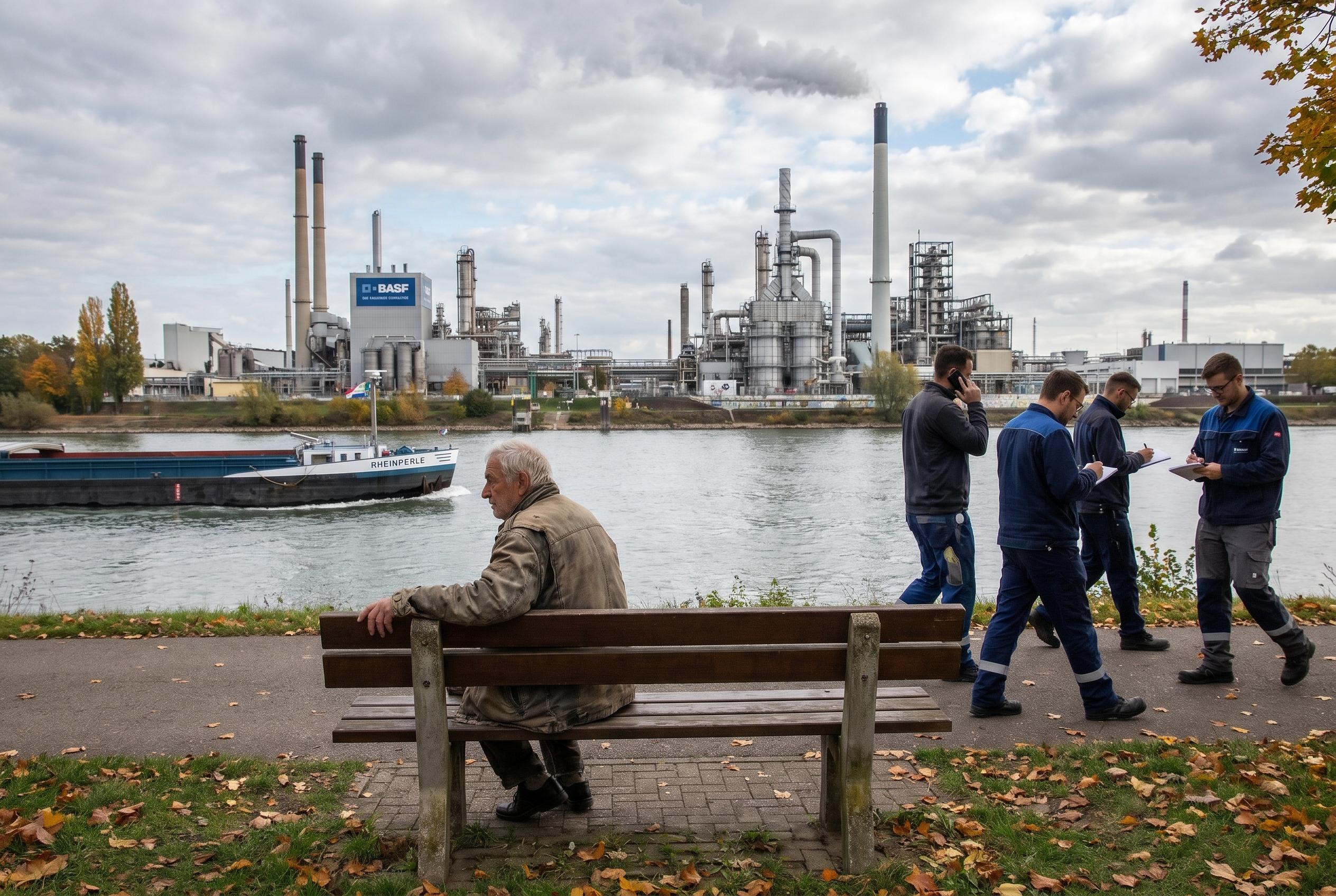
BASF’s shares face a potential reset following an ex-dividend move, as the chemicals giant accelerates buybacks and prepares to spin off its agribusiness, raising questions over its ongoing rally and future growth prospects.
BASF investors are heading into a week that could reset the stock’s recent run, with the German chemicals group set to trade ex-dividend after closing at a three-year high. The €2.25 per share payout approved at last week’s annual meeting will be stripped from the price on Monday, and the cash is due to reach shareholders on 6 May.
The move comes after a strong start to the year for the shares, which have climbed by about 22% and finished last week just shy of their 52-week peak. That leaves the stock comfortably above its 200-day moving average, a technical sign of strength, although the dividend adjustment is likely to open an immediate gap that traders will be watching closely.
Alongside the payout, BASF is pressing ahead with an accelerated buyback that now appears to be approaching an important checkpoint. The company said in October that it would repurchase up to €1.5 billion of stock between November 2025 and June 2026, as part of a wider €4 billion buyback plan under its longer-term pledge to return at least €12 billion to investors by 2028. BASF said the shares would be cancelled, reducing capital and supporting earnings per share.
The scale of the programme marks a sharper capital-return stance than in previous years. BASF had already been active in the market by mid-March, when it reported buying back 17.5 million shares for €789 million. The group also set out a broader distribution target in its latest reporting, combining dividends and repurchases as it looks to keep cash flowing to shareholders while preserving balance-sheet flexibility.
At the same time, BASF is moving ahead with a structural change in its agribusiness arm. From 1 May, the agricultural solutions division began operating under separate leadership, with Dr Livio Tedeschi appointed to oversee the business as it heads towards a planned listing in Frankfurt. The parent company expects to retain a majority stake after the flotation, which forms part of its “Winning Ways” strategy and is intended to unlock value in a business that has long been seen as solid but somewhat hidden inside the larger group.
BASF’s first-quarter figures were more mixed. Revenue slipped 3% to €16 billion as weaker pricing and currency movements weighed on results, even though volumes improved and demand from China held up. Earnings per share came in at €1.06, and management kept its full-year guidance unchanged, forecasting EBITDA before special items of €6.2 billion to €7 billion and free cash flow of €1.5 billion to €2.3 billion.
For investors, the key question is whether the share price can absorb the ex-dividend adjustment and keep pushing through a technical resistance area around €54 to €55. BASF has repeatedly struggled near that band since 2023, and the combination of a stronger capital-return story, a pending agribusiness separation and steady guidance may determine whether the latest rally can extend beyond a simple post-dividend reset.
Source Reference Map
Inspired by headline at: [1]
Sources by paragraph:
Source: Noah Wire Services
Noah Fact Check Pro
The draft above was created using the information available at the time the story first
emerged. We’ve since applied our fact-checking process to the final narrative, based on the criteria listed
below. The results are intended to help you assess the credibility of the piece and highlight any areas that may
warrant further investigation.
Freshness check
Score:
8
Notes:
The article was published on 2 May 2026, making it current. However, the content heavily references BASF’s share buyback programme announced in October 2025 and the agribusiness spin-off effective from 1 May 2026. While these events are recent, the article’s focus on these developments suggests a reliance on prior information, potentially reducing its originality. ([basf.com](https://www.basf.com/dam/jcr%3Ad0ea00b9-e3d7-4d08-830f-1259896c36ca/basf/www/global/documents/en/news-and-media/news-releases/2025/10/P219e_Share-Buyback.pdf?vid=Me7L7eQGIPSTp.F7Qo3d5YhguMLYG2jQ&utm_source=openai))
Quotes check
Score:
7
Notes:
The article includes direct quotes from BASF’s official communications, such as the share buyback announcement. These quotes are verifiable through BASF’s press releases. However, the article does not provide direct quotes from independent sources, which limits the ability to cross-verify the information.
Source reliability
Score:
6
Notes:
The article originates from ad-hoc-news.de, a niche financial news website. While it cites official BASF press releases, the site’s limited reach and potential biases may affect the reliability of the information presented.
Plausibility check
Score:
9
Notes:
The claims about BASF’s share buyback programme and agribusiness spin-off align with information from BASF’s official reports and press releases. However, the article’s reliance on a single source for these developments raises concerns about the comprehensiveness of the reporting.
Overall assessment
Verdict (FAIL, OPEN, PASS): FAIL
Confidence (LOW, MEDIUM, HIGH): MEDIUM
Summary:
The article provides current information on BASF’s share buyback programme and agribusiness spin-off. However, its heavy reliance on BASF’s official communications and a single source for verification raises concerns about the originality and independence of the reporting. The lack of direct quotes from independent sources further limits the ability to cross-verify the information, leading to a ‘FAIL’ verdict with medium confidence.


